
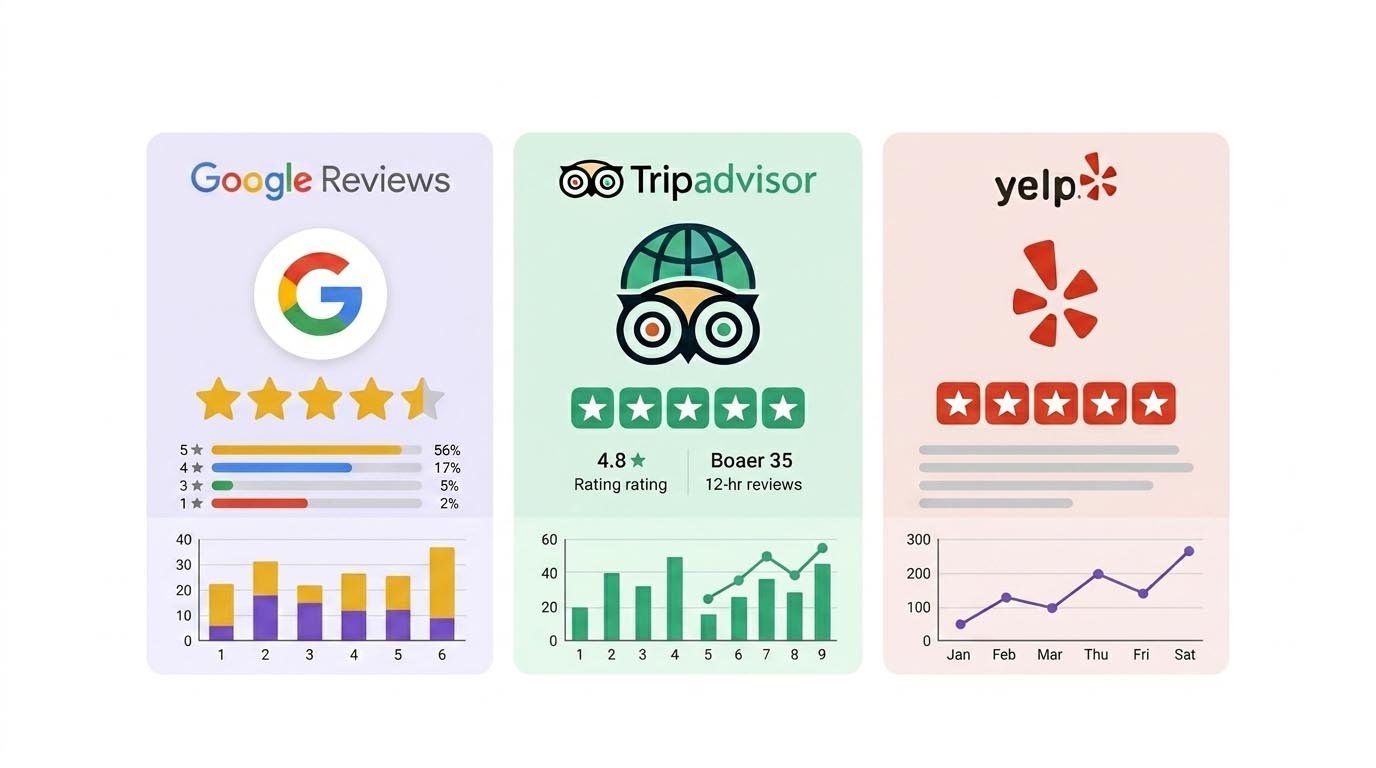
Google Reviews vs Yelp vs TripAdvisor: Where Should Local Businesses Focus?
You have limited time. Your customers have limited patience. Asking for reviews on three different platforms isn’t realistic.
So which one matters?
The honest answer: Google wins for almost every local business. But “almost” is doing real work in that sentence. Your specific industry, location, and customer base might be the exception.
This guide breaks down where each platform actually matters, why Google dominates local SEO, and how to decide where your review-collecting energy should go.
The Quick Answer (For Those in a Hurry)
If you run a local business and can only focus on one platform: Google. Full stop.
If you’re a restaurant or bar, especially in a tourist area: Google first, then TripAdvisor.
If you’re a restaurant in a major US city: Google first, then Yelp.
If you’re a hotel or B&B: TripAdvisor might actually matter more than Google.
Everyone else: Google. Maybe Google exclusively.
Now let’s get into why.
Why Google Reviews Dominate Local SEO
When someone searches “coffee shop near me” or “salon in [your city],” Google shows results. Not Yelp results. Not TripAdvisor results. Google results, with Google ratings, from Google Business Profiles.
The Local Pack (those three businesses shown with a map) pulls from Google’s own data. Your Yelp rating doesn’t appear there. Your 500 TripAdvisor reviews don’t influence your position. Only Google reviews count for Google rankings.
And Google is where people search.
Some numbers to consider: Google processes over 8 billion searches per day. Yelp gets around 178 million unique visitors per month. TripAdvisor around 463 million monthly. Those sound impressive until you realize Google handles that volume every few hours.
More importantly, Google is where purchase decisions start. Someone searching “best pizza downtown” is ready to buy. Someone browsing TripAdvisor might be planning a trip three months from now.
What Google reviews affect:
- Your position in local search results
- Your visibility in Google Maps
- Your appearance in the Local Pack
- Click-through rates (higher ratings get more clicks)
- Trust signals when people land on your Business Profile
No other platform influences all of these. That’s why Google comes first.
Where Yelp Still Matters
Yelp isn’t dead. It’s just not dominant anymore.
The platform maintains strong relevance in specific contexts. US-based restaurants in major metropolitan areas still see significant Yelp traffic. San Francisco, New York, Los Angeles, Chicago. Yelp built its reputation in these cities and the habit persists.
Home services (plumbers, electricians, contractors) also see Yelp activity in the US. People looking for service providers sometimes start on Yelp because they trust the review verification more than Google’s.
Outside the US, Yelp barely registers. European businesses can largely ignore it. Asian markets never adopted it. If your customers are primarily international tourists, Yelp reviews won’t reach them.
Yelp makes sense if:
- You’re a restaurant in a major US city
- You’re a home service provider in the US
- Your competitors have strong Yelp presences you need to match
- You’re already getting organic Yelp reviews and want to maintain them
Yelp probably isn’t worth the effort if:
- You’re outside the United States
- You’re in a smaller US city or suburban area
- Your industry isn’t food or home services
- You’re starting from zero and need to prioritize
The other Yelp consideration: their business model. Yelp pushes advertising hard. Business owners regularly complain about sales calls. Some believe (controversially) that Yelp suppresses positive reviews for non-advertisers. Whether true or not, the perception creates friction.
Where TripAdvisor Still Matters
TripAdvisor carved out a specific niche: travel planning. Hotels, tourist attractions, and restaurants in tourist-heavy areas still see real impact from TripAdvisor reviews.
If someone is planning a trip to your city, they might check TripAdvisor before they arrive. They’re researching hotels, looking for “things to do,” finding restaurants for their itinerary. For these pre-planned decisions, TripAdvisor carries weight.
The key word is “tourist.” If your customers are primarily locals, TripAdvisor reviews barely matter. A neighborhood coffee shop in a residential area won’t get discovered on TripAdvisor. A coffee shop near a famous landmark might.
TripAdvisor makes sense if:
- You’re a hotel, hostel, or B&B
- You’re a restaurant in a tourist destination
- You’re a tour operator or attraction
- A significant portion of your revenue comes from visitors, not locals
TripAdvisor probably isn’t worth it if:
- Your customers are primarily local
- You’re not in a tourist-heavy location
- Your business doesn’t relate to travel or hospitality
For hotels specifically, TripAdvisor might deserve equal or even primary focus. Travelers actively compare hotels on the platform. A strong TripAdvisor presence directly influences bookings in ways that Google reviews sometimes don’t.
Industry-by-Industry Breakdown
Different businesses have different platform priorities. Here’s a realistic assessment:
Restaurants and Cafes Primary: Google (always) Secondary: Yelp (US major cities) or TripAdvisor (tourist areas) Skip: Everything else
Google reviews directly impact your visibility when hungry people search. If you’re in a US metro, maintaining Yelp presence prevents competitors from outflanking you there. Tourist areas should add TripAdvisor to the mix.
Hotels and Accommodation Primary: Google and TripAdvisor (roughly equal) Secondary: Booking.com reviews (if you list there) Skip: Yelp
Travelers check multiple sources. TripAdvisor remains a primary research tool for accommodation specifically. Google matters for search visibility. You probably need to maintain both.
Retail Stores Primary: Google Secondary: None Skip: Yelp, TripAdvisor
Retail discovery happens on Google. Nobody searches TripAdvisor for “clothing stores in [city].” Yelp retail presence is minimal. Focus exclusively on Google.
Salons and Barbershops Primary: Google Secondary: None Skip: Everything else
Beauty services are hyperlocal. People search Google Maps for nearby options. Neither Yelp nor TripAdvisor have meaningful presence in this category outside major US cities.
Home Services (Plumbers, Electricians, Contractors) Primary: Google Secondary: Yelp (US only) Skip: TripAdvisor
Google dominates service searches. Yelp maintains some US presence for these categories but it’s declining. Focus on Google, acknowledge Yelp exists if you’re in the US.
Fitness (Gyms, Studios) Primary: Google Secondary: None Skip: Everything else
Gym decisions are local and often made via Google Maps. Platform loyalty is non-existent in this category. Google only.
Professional Services (Lawyers, Accountants, Dentists) Primary: Google Secondary: Industry-specific platforms (Avvo, Healthgrades, etc.) Skip: Yelp, TripAdvisor
Trust matters enormously in professional services. Google reviews build local visibility. Industry platforms build credibility within your field. General platforms add little value.
The Hidden Cost of Platform Fragmentation
Every platform you try to maintain is energy not spent on Google.
Consider what it takes to build reviews on any platform: you need to ask customers to use that specific platform. You need signage pointing there. You need to monitor and respond to reviews. You need to handle the occasional negative review.
Doing this for three platforms means doing each one worse than if you focused on one.
The business with 200 Google reviews beats the business with 80 Google reviews, 60 Yelp reviews, and 60 TripAdvisor reviews. Total count similar. Impact on local search completely different.
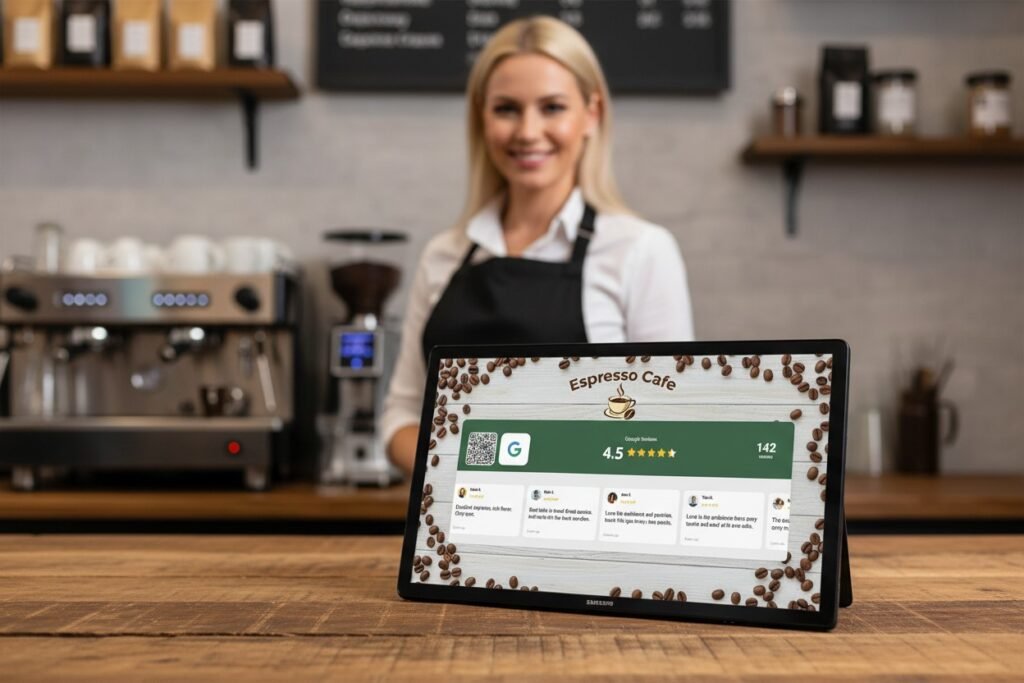
Consolidation has real advantages. Ask for Google reviews specifically. Make it effortless with a direct QR code to your Google review page. Display your Google rating prominently so customers know that’s where you want feedback.
If you genuinely need presence on a second platform, add it. But don’t spread thin across three or four platforms because it feels comprehensive. Depth beats breadth.
The Platform People Actually Use
Here’s something business owners often miss: you don’t choose where customers leave reviews. They do.
You can ask for Google reviews. You can make it easy. But some percentage of customers will still leave Yelp reviews if that’s their habit. Some will post on TripAdvisor if they’re travelers. You can’t prevent this.
What you can do is focus your proactive efforts on Google while maintaining basic profiles on other platforms. Claim your Yelp listing so you can respond to reviews if they appear. Claim your TripAdvisor listing for the same reason. But don’t actively request reviews there unless your specific situation warrants it.
The 80/20 rule applies. Eighty percent of your review strategy should be Google. The remaining twenty percent is maintaining presence elsewhere and responding when reviews happen organically.
Responding Across Platforms
Whatever platforms have reviews, you need to respond. This isn’t optional.
Unanswered reviews (especially negative ones) signal neglect. On Google, owner responses may influence rankings. On all platforms, future customers read your responses to judge how you handle feedback.
Set a weekly reminder. Check Google, Yelp, TripAdvisor, whatever platforms you’re on. Respond to everything from the past week. Positive reviews get a quick thank you. Negative reviews get a professional acknowledgment and offer to resolve.
This takes maybe thirty minutes per week. It’s maintenance, not active strategy. But skipping it undermines whatever review collection you’re doing.
Displaying Your Reviews
Reviews have two functions: influencing search rankings and influencing customer decisions.
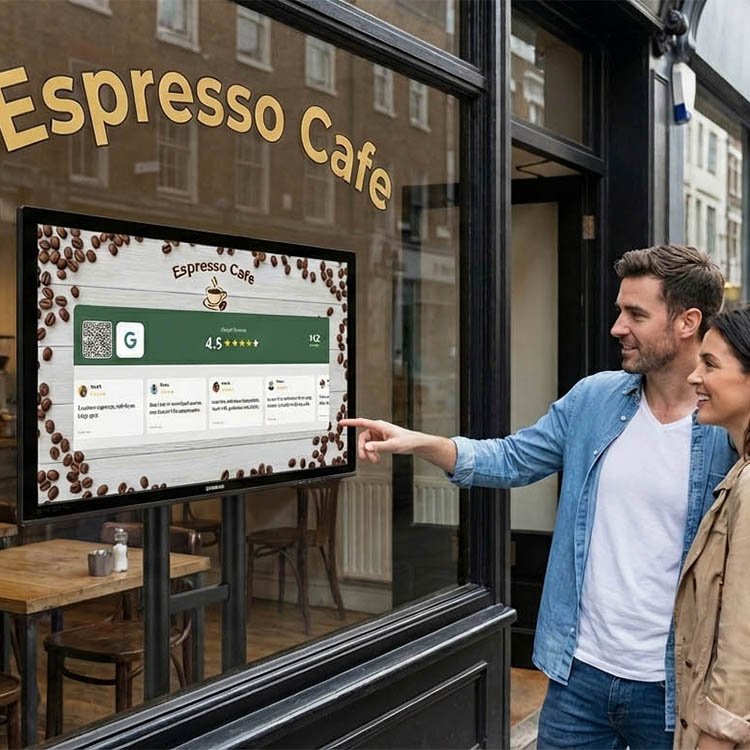
For the second function, visibility matters. Your Google rating sitting on your Business Profile does some work. Your Google rating displayed on a screen in your window does more.
Social proof works best when it’s visible at decision moments. Someone walking past your business, deciding whether to enter, is at a decision moment. A screen showing “4.7 stars from 284 reviews” answers their trust question instantly.
This only makes sense for Google reviews. Displaying your Yelp rating to customers in Amsterdam is meaningless. They don’t use Yelp. Displaying your TripAdvisor rating to locals grabs no attention. They’re not travelers.
Google is universal. Everyone understands Google stars. That’s another reason to consolidate there.
Making the Decision
If you’ve read this far, you probably want a simple answer. Here it is:
Default to Google. Use a review QR code to make leaving reviews easy. Display your rating to maximize its impact. Respond to every review. This covers 90% of local businesses.
Add TripAdvisor if you’re a hotel, tourist-area restaurant, or attraction. Tourists use it for planning. Your absence hurts.
Add Yelp if you’re a restaurant or home service provider in a major US city. Your competitors are probably there. You should be too.
Skip everything else unless you have specific evidence that your customers use it. Spreading thin helps no one.
The businesses winning at local search aren’t the ones present everywhere. They’re the ones dominant somewhere. For almost every local business, that somewhere is Google.
Focus accordingly.
