
Retail Store Signage That Actually Brings People In
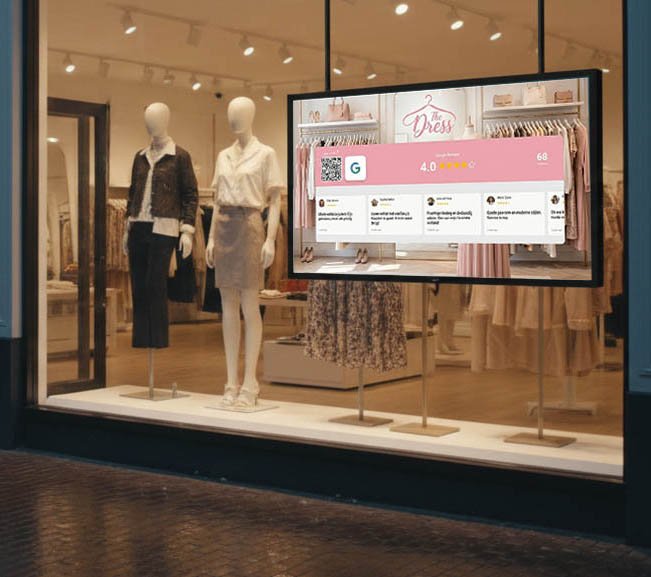
A boutique owner in Rotterdam told us that they doubled their foot traffic stepping in by changing one thing, her window. Not the products in it. Not the layout of it. Just what she was showing through the glass itself.
they added a small screen showing their shops Google rating and review count. Nothing fancy. Just “4.8 stars with 340 reviews” rotating with real customer testimonials. People stopped to look and check the reviews. Then they walked in to see what all the fuss was about.
Their products hadn’t changed. Her prices hadn’t changed. The only difference was that strangers could now see, from the sidewalk, that other people loved their store and gave good reviews.
Most retail signage fails because it tries to sell. The signs that work build social trust first.
Your Window Is Your Billboard You Already Pay For
Every month you pay rent on that window space you have. Most store owners treat it like storage, cramming in as much product as possible to show all they have, hoping something catches someone’s eye and make people buy.
The stores with lines out the door treat their windows like magazine covers. One story. One focal point. One reason to step inside.
A nice focused window display with one great single hero product, proper lighting, and regular rotation outperforms a cluttered showcase every time. Think about what makes you stop when you walk past a store. It’s never “look at all that stuff.” It’s “what is THAT?”
Rotate your window monthly at minimum. Weekly is even better. A window that never changes signals a store that never changes and will only have goods you have already seen. Fresh displays tell passersby that something new awaits inside. visible from the sidewalk (window) or immediately upon entry. First impressions set the tone for everything.
The Trust Problem Nobody Talks About
When someone walks into a store they’ve never visited, they’re taking a small risk. Will the quality match the prices? Is this place actually good or just conveniently located? Should I have just ordered online instead?
These questions run through every new customer’s mind. Most store owners try to answer them with service, which only works after someone is already inside and browsing.
Social proof answers these questions from the sidewalk.
A screen in your window showing your live Google rating does something no amount of friendly service can do: it lets 340 strangers vouch for you before a new customer takes a single step inside. That number represents real people who visited, purchased, and felt strongly enough to leave feedback.
When those reviews rotate on screen with actual testimonials, the effect compounds. “Best gift shop in town” addresses quality concerns. “Finally a boutique with reasonable prices” addresses pricing concerns. “The owner helped me find the perfect anniversary gift” addresses service concerns. Each review removes a barrier.
The difference between a printed rating sticker and a live display matters more than you might think. A sticker showing “4.5 stars” from 2019 feels dated. A screen showing your current rating with reviews from last week feels alive. It signals that people are still coming, still buying, still loving what you do.
Follower Counts as Credibility
Your Instagram following is social proof most retailers completely ignore.
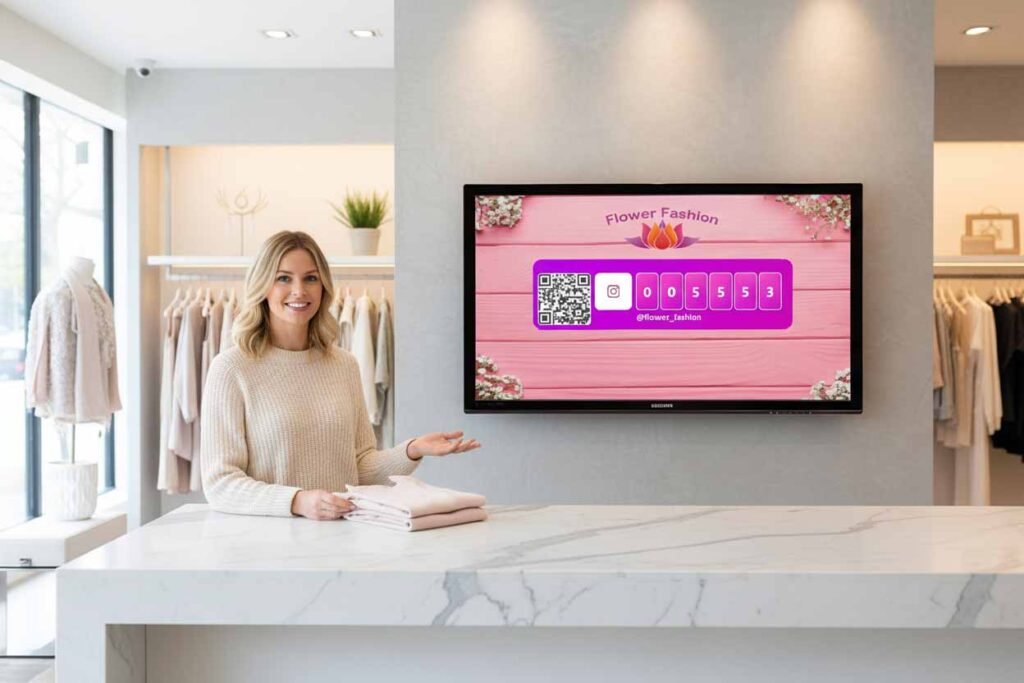
When a customer sees you have 8,000 followers displayed on a screen, their perception shifts instantly. If 8,000 people follow this store, there must be a reason. The number creates legitimacy that would take years of advertising to build.
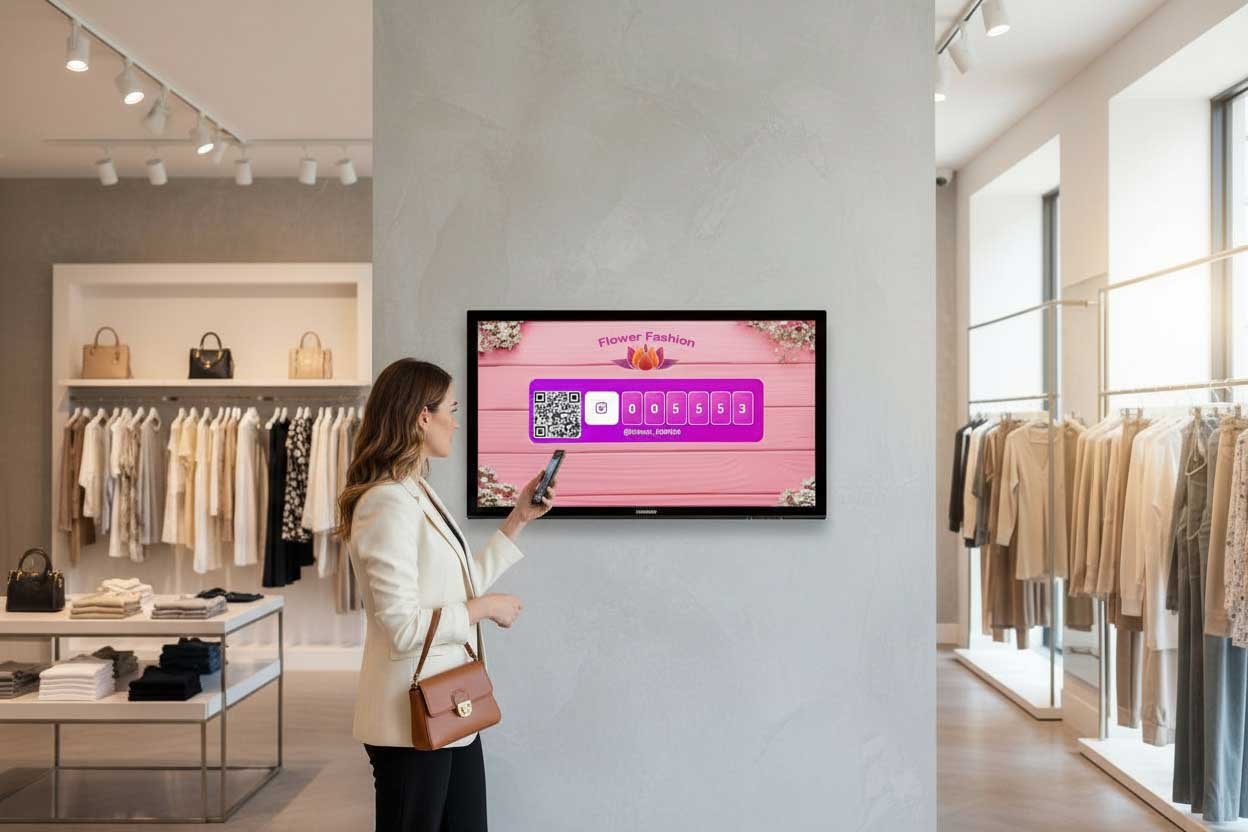
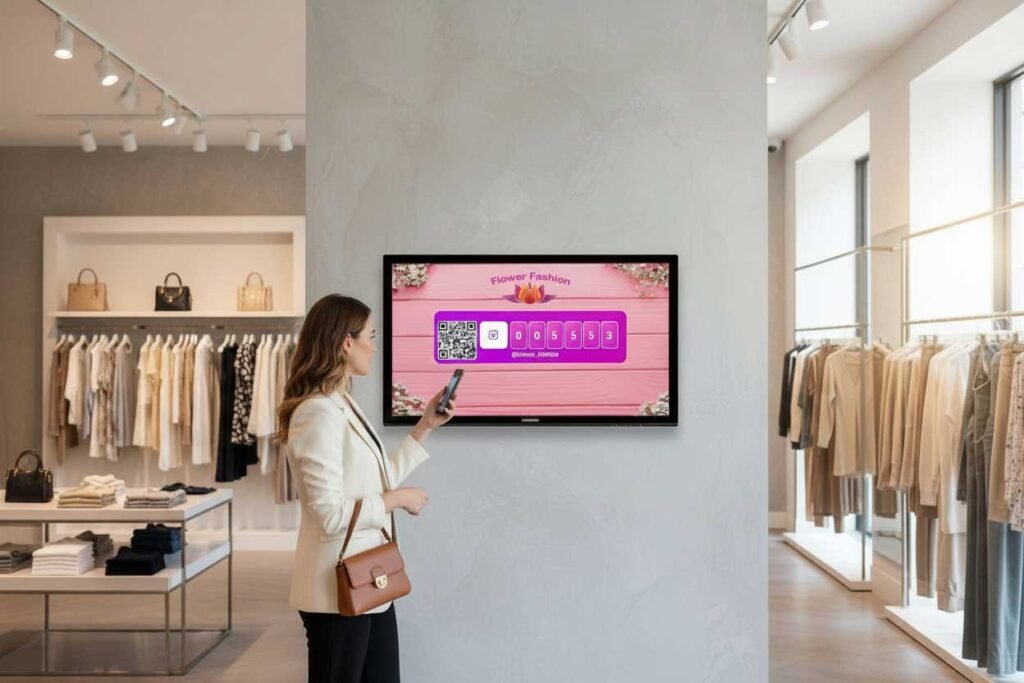
Displaying your follower count with a QR code to follow turns passive browsers into connected customers. Someone follows you while browsing. Next week they see your post about new inventory. They return and buy. That loop starts with making your social presence visible in physical space.
The combination of reviews and followers on one display creates a complete trust picture. Quality proof plus popularity proof. Every objection answered before they start shopping.
ImSidewalk Presence
An A-frame sign on the sidewalk meets pedestrians exactly where they are, at eye level, with a direct message.
The stores that get results from A-frames change them constantly. “New arrivals this week” works today. Next week it says something else. A fresh message signals an active store. The same message for months signals neglect.
Personality wins here. A confident, slightly playful A-frame message makes people smile. Smiling people are more likely to walk in. Generic “Sale Inside” messaging blends into the visual noise of every other store on the street.
Your main storefront sign matters too, but not in the way most owners think. The question isn’t whether it looks nice. The question is whether someone across the street can tell what you sell. “Sarah’s” tells people nothing. “Sarah’s Vintage Finds” tells them everything they need to decide whether to cross.
Inside the Store
Once customers enter, signage shifts from attraction to navigation and conversion.
Clear category markers reduce friction. When people can’t find something, they leave rather than ask. Simple wayfinding signs keep customers browsing longer and reduce the mental load of shopping in an unfamiliar space.
Product story cards differentiate you from chains. A $40 candle feels expensive until you read it’s hand-poured in small batches by a local maker using essential oils from a nearby farm. The story justifies the price and creates emotional connection.
Small retail stores have an advantage here. You curated these products for reasons. You know their origins, their makers, their quality. A small card sharing that story does selling you’d otherwise have to do verbally, and it works even when you’re busy with another customer.
The Checkout Zone
The counter where customers pay is the highest-value real estate in your store. Decisions finalize here. Impulse purchases happen here. And the transition from satisfied customer to promoter happens here.
Small signage near low-commitment items drives add-on sales. “Under $10” or “Customer favorites” near the register catches people in a buying mood with time to kill while you wrap their purchase.
This is also where a QR code linking to your Google review page works hardest. The customer just had a good experience. Their feelings are warm. Asking them to leave a review right now, while making it effortless with a single scan, converts far more than hoping they remember later.
A display screen at checkout showing your reviews and follower counts serves double duty. It reinforces that other customers love you, which reduces any lingering doubt about their purchase. And it prompts them to join that community of fans by following you or leaving their own review.
The Signage Most Stores Forget
Store hours and “Open” signs seem obvious, but I’ve watched countless potential customers peer through windows, check their phones, look confused, and walk away. An illuminated “Open” sign visible from the sidewalk removes all doubt.
Press mentions and awards deserve display space. If a local magazine named you “Best Boutique,” that’s third-party validation worth more than anything you could say about yourself. A small window decal or framed mention near the entrance says “don’t just take our word for it.”
Thank-you signage at the exit leaves a warm final impression. Pair it with your social handles for one last chance at connection. “Thanks for shopping local” followed by your Instagram handle gives happy customers an easy next step.
What Actually Matters
After watching stores succeed and struggle with signage for years, the pattern is consistent. The physical signs matter less than what they communicate.
Signs that build trust outperform signs that sell. A live review display in your window brings more people inside than a “30% Off” banner because trust is the bottleneck, not awareness of deals.
Signs that change outperform signs that stay static. A weekly A-frame rotation signals life. A display showing real-time social counts and fresh reviews signals momentum. Static signage from three years ago signals stagnation.
Signs that make action easy outperform signs that just inform. A QR code to follow you or leave a review converts interest into connection. A sign that just says “Follow us on Instagram” relies on customers remembering to search later. They won’t.
The stores that thrive understand that every sign is either building trust and driving action, or it’s taking up space. There’s no neutral signage.
Start with your window. Add one element that shows strangers why your existing customers love you. Watch what happens when trust comes before selling.
