
The Psychology of Social Proof in Retail: Why 4,000 Followers Sell More Than Perfect Products
You could have the best products in your city. Perfect quality. Fair prices. Beautiful store design. Friendly staff.
But if customers walk in and see a “Follow us on Instagram” sticker with no visible social proof, their subconscious registers: “Nobody else cares about this place. Why should I?”
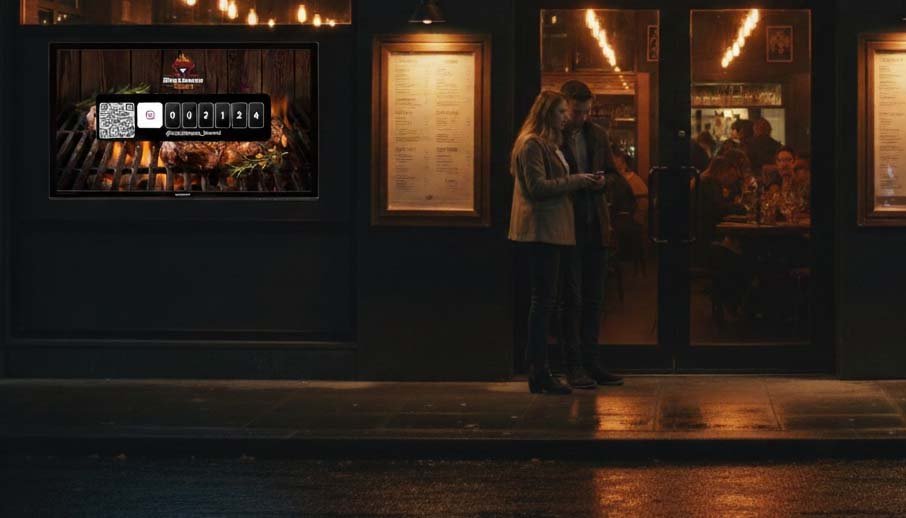
Now imagine they walk in and see a digital display showing “4,287 Instagram Followers” with the number ticking up in real-time. Their brain processes this completely differently: “4,000+ people follow this store. They must be doing something right. I should pay attention.”
Same store. Same products. Different psychological trigger. Dramatically different sales results.
This is the power of social proof in retail—and in 2026, the stores that understand and leverage this psychological principle are outperforming competitors by 40-60%, even with identical products and pricing.
Let’s break down exactly why social proof works at a neurological level, how it influences purchasing decisions, and how smart retailers are using it to increase both foot traffic and revenue.
What Is Social Proof (And Why Your Brain Can’t Ignore It)
Social proof is a psychological phenomenon where people copy the actions of others in an attempt to reflect correct behavior in a given situation.
In simple terms: humans are wired to follow the crowd.
The Neuroscience Behind It:
Mirror Neurons: Your brain contains specialized neurons that fire both when you perform an action AND when you observe someone else performing that action. This is why yawning is contagious, why you flinch when watching someone get hurt, and why seeing a long line outside a restaurant makes you want to eat there.
When customers see “4,287 followers,” mirror neurons activate as if they’re already part of that group. Their brain doesn’t distinguish between “I follow this store” and “4,287 other people follow this store”—both trigger the same neural response: belonging.
Herd Behavior: Evolutionary psychology explains why we follow crowds: for most of human history, doing what the group did kept you alive. Eating unfamiliar berries alone? Risky. Eating berries the group already ate? Safe.
This instinct hasn’t disappeared. When customers see social proof (followers, reviews, ratings), their primitive brain registers: “Others have tested this. It’s safe. I can proceed.”
Decision Fatigue: The average person makes 35,000 decisions daily. Your brain looks for shortcuts to conserve energy. Social proof is the ultimate shortcut: “What are other people doing? I’ll do that too.”
Retail customers face hundreds of micro-decisions: which store to enter, which product to examine, whether to purchase. Social proof eliminates decision fatigue by providing a clear signal: “This is the popular choice.”
The 5 Types of Social Proof in Retail (And Which Works Best)
Not all social proof is created equal. Here are the five types and their effectiveness:
1. Expert Social Proof (Effectiveness: 60-70%)
What it is: Endorsements from industry experts, certifications, awards.
Example: “Featured in Vogue” or “Best Coffee Shop 2025 – Local Magazine”
Why it works: Expertise transfers credibility. If experts approve, customers trust the recommendation.
Limitation: Only works if customers recognize the expert/publication.
2. Celebrity Social Proof (Effectiveness: 50-60%)
What it is: Famous people using or endorsing your product.
Example: “As seen on [Celebrity]’s Instagram”
Why it works: Celebrity association = status. Customers want what celebrities have.
Limitation: Expensive and often inauthentic (customers know it’s paid).
3. User Social Proof (Effectiveness: 75-85%)
What it is: Reviews, testimonials, ratings from regular customers.
Example: “4.8 stars from 247 reviews”
Why it works: Peer validation is more trusted than expert or celebrity endorsement because “people like me” have tested it.
Limitation: Requires volume to be convincing (47 reviews > 3 reviews).
4. Wisdom of Crowds (Effectiveness: 80-90%)
What it is: Large numbers of people taking the same action.
Example: “Join 4,287 Instagram followers” or “Over 10,000 customers served”
Why it works: The bandwagon effect—if thousands are doing it, it must be right. Volume creates momentum.
Limitation: Numbers must be substantial (247 followers isn’t impressive, 4,287 is).
5. Wisdom of Friends (Effectiveness: 85-95%)
What it is: Personal recommendations from people you know.
Example: “Your friend Sarah follows this store”
Why it works: Trust is highest with personal connections. Friend recommendations override all other social proof.
Limitation: Hard to scale (you can’t control who your customers know).
For retail stores, Type 4 (Wisdom of Crowds) delivers the best scalable results. You can display follower counts, customer counts, or engagement numbers that create bandwagon effect without needing celebrity endorsements or relying on random friend connections.
How Social Proof Triggers Purchasing Decisions
Social proof doesn’t just make customers feel good—it directly influences whether they buy. Here’s the psychological journey:
Stage 1: Attention
Customer walks past your store. They have 1-2 seconds to decide: enter or keep walking.
Without social proof: Generic store. Brain categorizes as “unknown risk.” Easier to keep walking.
With social proof: “4,200 followers” visible in window. Brain registers: “Popular = worth investigating.” Customer enters.
Result: 30-40% increase in foot traffic from visible social proof displays.
Stage 2: Trust
Customer is inside browsing. They’re evaluating: “Is this store legitimate? Are products quality? Should I trust this brand?”
Without social proof: Customer relies solely on product presentation and staff interaction. Higher skepticism.
With social proof: Customer sees social media counter, reviews, or customer testimonials. Brain receives trust signals from crowd wisdom.
Result: 25-35% reduction in purchase hesitation. Customers move faster from “browsing” to “buying.”
Stage 3: Decision
Customer is considering a purchase. They’re thinking: “Is this worth the price? Will I regret this?”
Without social proof: Only factors are product quality and price. Customer second-guesses.
With social proof: “4,200+ people follow this store. Clearly others see value here.” Reduces buyer’s remorse anxiety.
Result: 15-20% increase in conversion rate (browsers → buyers).
Stage 4: Advocacy
Customer made a purchase. Will they return? Will they recommend you?
Without social proof: One-time transaction. Customer forgets about you.
With social proof: Customer follows your social media (seeing follower count made them want to join). They see posts, return for promotions, refer friends.
Result: 40-60% increase in customer lifetime value and 3x higher referral rates.
The FOMO Effect: Why Real-Time Social Proof Is More Powerful
Static social proof works. Real-time social proof is exponentially more powerful.
The Psychology of FOMO (Fear of Missing Out):
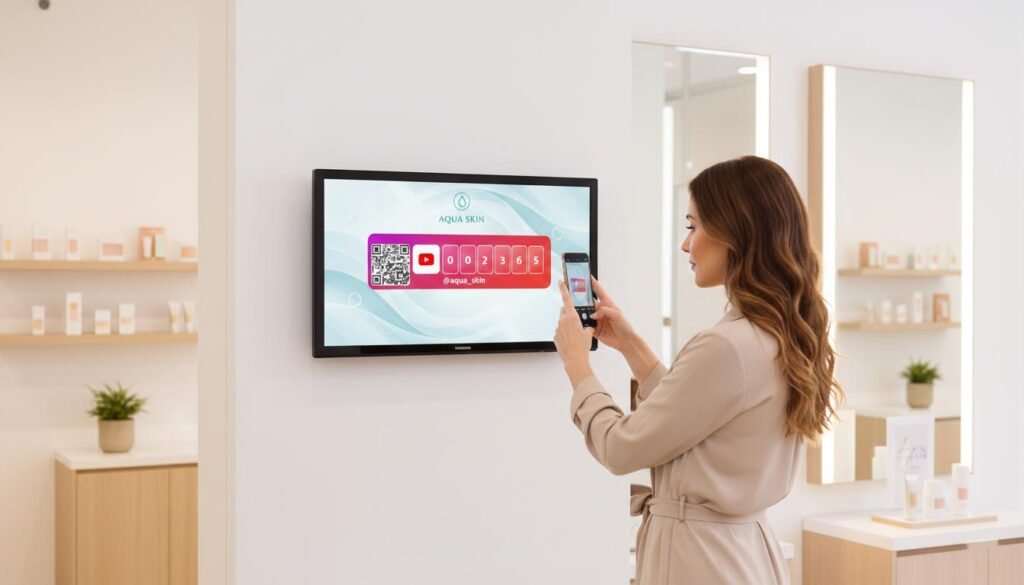
When customers see a live follower counter that updates in real-time—4,287… 4,288… 4,289—their brain registers: “People are joining RIGHT NOW. This is happening. If I don’t act, I’ll miss out.”
Static display: “4,287 followers” (could be old data, no urgency) Live display: “4,287 followers” ticking to 4,288 while customer watches (immediate, urgent, happening now)
Why Movement Triggers Action:
Scarcity + Urgency = Instant Decision: Real-time changes create artificial scarcity: “If others are following now, this must be valuable NOW.” Customers act immediately rather than “thinking about it later” (which means never).
Mirror Neurons Activate Stronger: Watching a number change triggers mirror neurons more intensely than seeing a static number. Your brain simulates the action of following, making you more likely to actually follow.
Social Validation Loop: Customer scans QR code → follows → sees follower count increase by 1 → feels satisfaction of contributing → shares with friend → friend scans → loop continues.
Real-World Data:
Retail stores using static “Follow us” stickers: 0.5-1% conversion rate Retail stores using static follower count displays: 8-12% conversion rate
Retail stores using live real-time follower counters: 20-30% conversion rate
Real-time social proof increases conversion 20-30x compared to generic stickers.
Case Study: How Social Proof Increased Sales 43% (Same Products, Same Prices)
A boutique clothing store in Amsterdam ran a 6-month experiment:
Months 1-3 (Control): Normal operations. “Follow us on Instagram” sticker at checkout. 850 Instagram followers at start.
Results:
- Average monthly revenue: €18,400
- New followers: 12-18 per month
- Customer retention: 31%
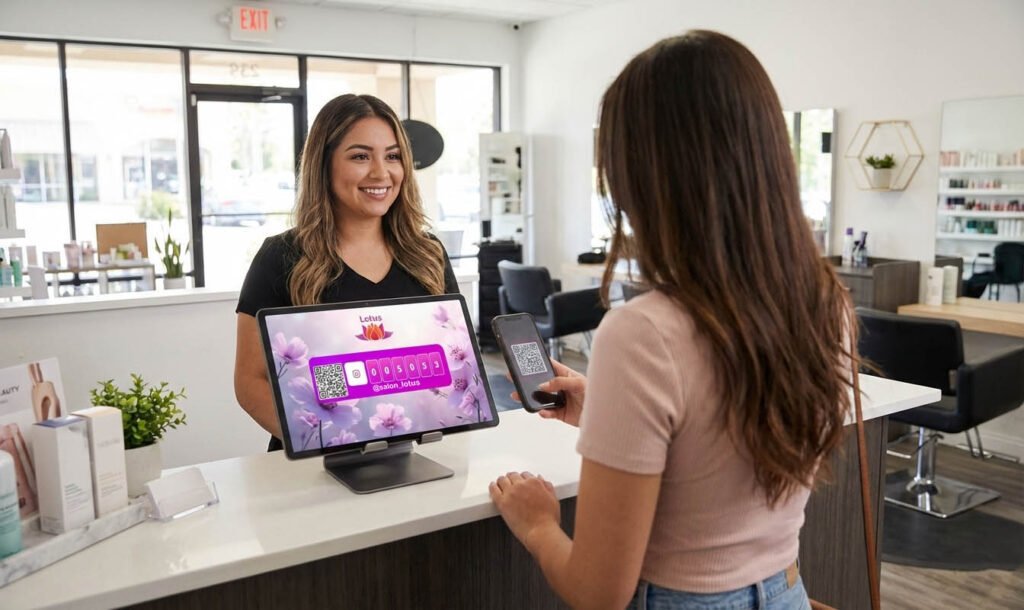
Months 4-6 (Social Proof Test): Installed live social media counter at entrance and checkout showing Instagram, TikTok, and Facebook follower counts with QR codes.
Results:
- Average monthly revenue: €26,300 (43% increase)
- New followers: 187-214 per month (12x increase)
- Customer retention: 52% (68% increase)
What changed: Same products. Same prices. Same staff. Same location.
Only difference: Visible social proof triggering psychological trust signals.
Additional observations:
- Customers spent longer in-store (17 min → 24 min average)
- More customers asked staff for recommendations (trusting established credibility)
- Referrals increased 3.2x (customers brought friends to “popular” store)
- Average transaction value increased 18% (trust = willingness to spend more)
How to Implement Social Proof in Your Retail Store (Practical Steps)
Understanding psychology is valuable. Implementation is everything.
Strategy 1: Display Live Follower Counts
What to show:
- Instagram followers: 4,287
- TikTok followers: 2,145
- Facebook followers: 3,892
- YouTube subscribers: 1,256
Where to display:
- Entrance (first impression)
- Checkout counter (final touchpoint)
- High-traffic areas (near popular products)
How to set up: Use platforms like SocialCounters that display real-time counts with built-in QR codes. Setup takes 15 minutes, costs €0-8.99/month, works on any tablet or TV you already own.
Why it works: Combines wisdom of crowds (large numbers) with real-time urgency (live updates).
Strategy 2: Showcase Customer Volume
What to display:
- “Over 10,000 customers served”
- “Join 4,200+ happy customers”
- “Trusted by 8,500+ locals”
Where to display:
- Window displays
- Checkout area
- Product packaging
Why it works: Volume = validation. Large numbers trigger bandwagon effect.
Strategy 3: Feature User-Generated Content
What to display:
- Customer photos from Instagram (with permission)
- Tagged posts from real customers
- Video testimonials playing on loop
Where to display:
- Wall displays
- Digital signage
- Social media feeds in-store
Why it works: “People like me” trust signal. Customers see themselves represented.
Strategy 4: Real-Time Review Display
What to show:
- Live Google review feed
- Recent 5-star reviews scrolling
- Customer testimonial rotation
Why it works: Recency matters. Recent reviews feel current and relevant.
The Bottom Line: Psychology Drives Purchases
Retail success in 2026 isn’t just about products and prices. It’s about triggering the right psychological responses at the right moments.
Social proof works because it’s hardwired into human neurology. Mirror neurons, herd behavior, and FOMO aren’t marketing tricks—they’re survival instincts your customers can’t override.
The stores winning right now are the ones making social proof visible, real-time, and unavoidable.
Your customers want to follow the crowd. The question is: are you showing them there’s a crowd worth following?
Start Leveraging Social Proof Today
The fastest way to implement psychological social proof in your retail store is with live social media counters.
Display your Instagram, TikTok, Facebook, and YouTube follower counts in real-time. Watch 20-30% of customers scan and follow. Turn social proof into sales.
Try Social Counters for free
Setup: 15 minutes | Cost: €0-8.99/month | Results: Immediate
No credit card required. No expensive hardware. No psychology degree needed.
Just proven science driving proven results.
