
10 Powerful Social Proof Ideas Every Small Business Should Use in 2026
People don’t trust businesses. They trust other people.
That’s the foundation of social proof — the psychological phenomenon where we look to others to guide our decisions. When a potential customer sees that hundreds of people love your business, they assume they will too.
For small businesses competing against bigger brands with bigger budgets, social proof is your secret weapon. You don’t need a massive marketing budget. You need evidence that real people trust you.
Here are 10 social proof ideas that actually work for small businesses, starting with the two most powerful tactics you can implement today.
1. Display Your Google Reviews In-Store
Impact: ⭐⭐⭐⭐⭐
Your Google reviews are gold. But here’s the problem: most customers only see them before they visit. Once they’re inside your store, restaurant, or office, that social proof disappears.
The solution? Bring your reviews inside.
A digital Google review display shows your live star rating, total review count, and actual customer testimonials on a screen in your business. Customers walking in see real feedback from real people — not a printed card, but dynamic, scrolling reviews that prove your reputation.
This works because timing matters. Social proof at the moment of purchase is infinitely more powerful than social proof during the research phase. When someone sees “Best coffee in town!” on a screen while standing in line, their confidence skyrockets.
How to implement: Use a service like Social Counters to connect your Google Business Profile and display reviews on any TV, tablet, or monitor. Reviews update automatically twice a day, and you can filter to show only 4-star and above ratings.
Best for: Restaurants, cafes, retail stores, salons, gyms, medical offices, hotels

2. Show Your Social Media Follower Counts
Impact: ⭐⭐⭐⭐⭐
Numbers build credibility. When customers see that 5,000 people follow your Instagram or 10,000 subscribers watch your YouTube channel, they instantly perceive you as established and trustworthy.
But those numbers live online, hidden from the customers standing in your store.
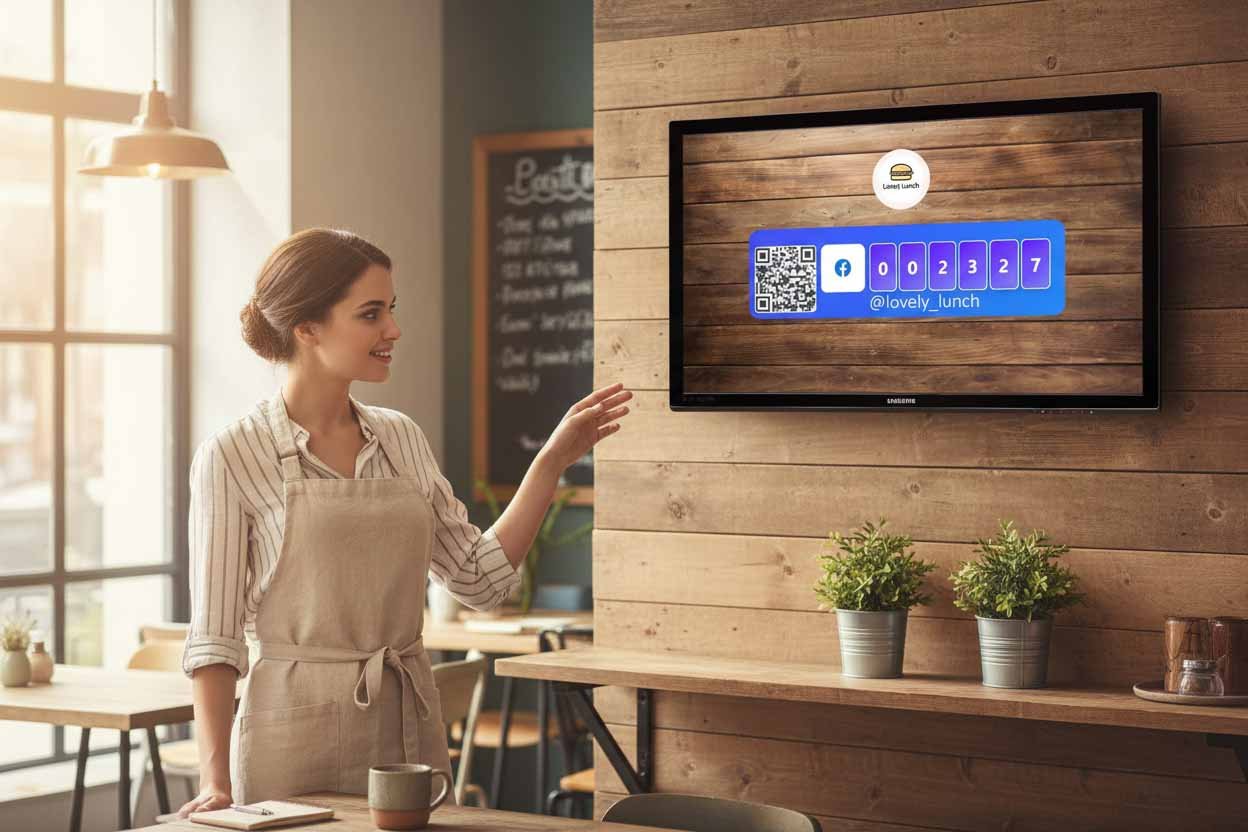
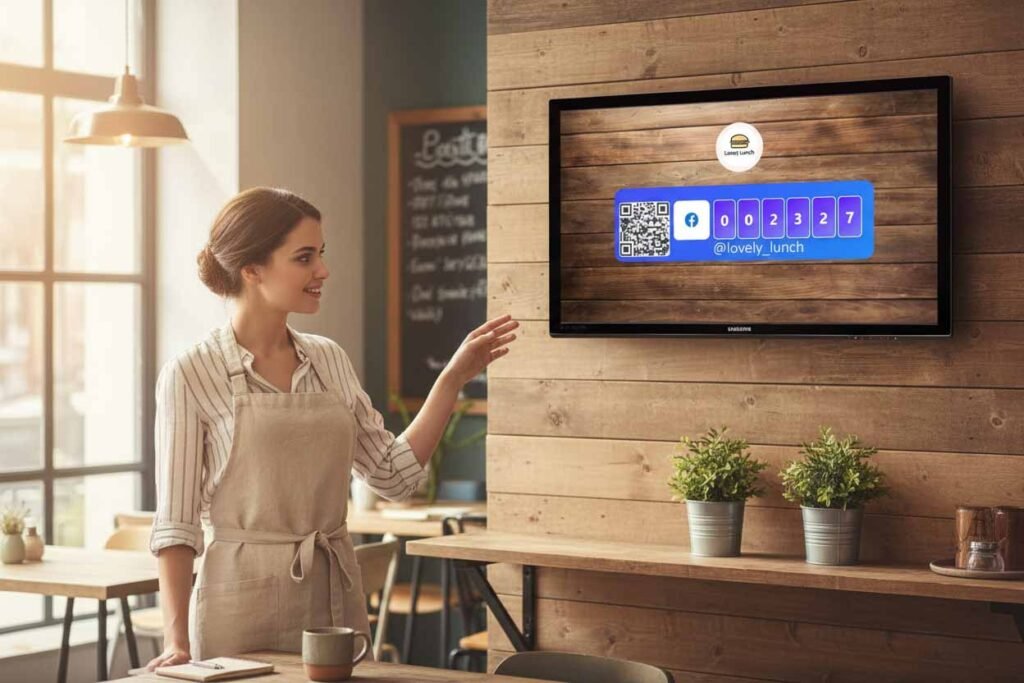
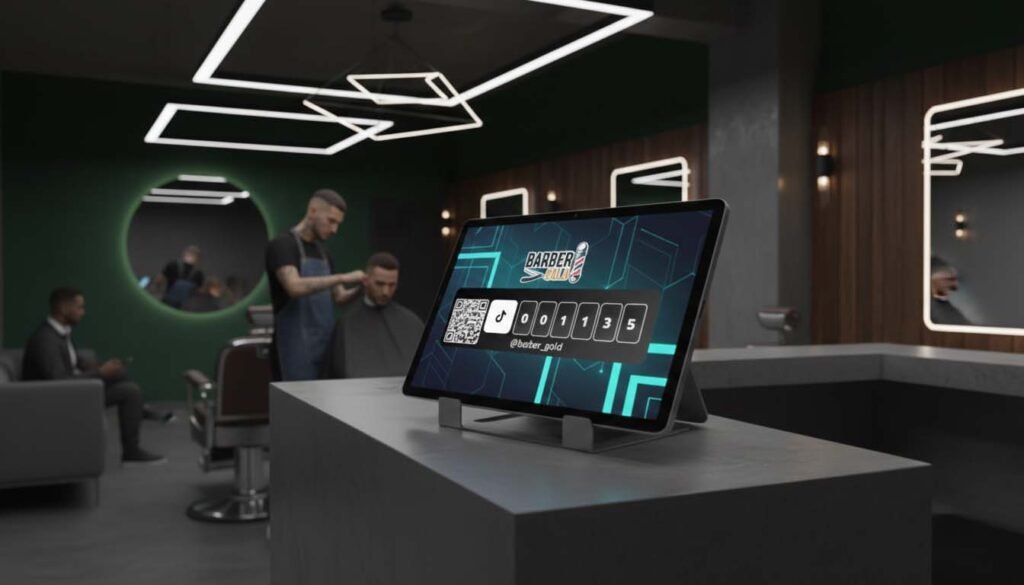
A social media follower counter displays your real-time follower counts on a screen in your business. It shows Instagram, TikTok, YouTube, and Facebook — complete with QR codes so customers can follow you on the spot.
This creates a powerful loop: customers see your following, feel confident in your business, and add themselves to that number. Your social proof literally grows while customers watch.
How to implement: SocialCounters lets you display live follower counts from multiple platforms on one screen. The display updates automatically as your following grows, creating a sense of momentum and popularity.
Best for: Any business with an active social media presence, especially those targeting younger demographics
3. Feature Customer Testimonials on Your Website
Impact: ⭐⭐⭐⭐
This one seems obvious, but most small businesses do it wrong. They hide testimonials on a dedicated “Reviews” page that nobody visits, or they use generic quotes without names or photos.
Effective testimonials are specific, attributed, and strategically placed.
What works:
- Full names and photos (with permission)
- Specific results: “Increased our sales by 40%” beats “Great service!”
- Placed on high-intent pages: pricing, checkout, contact forms
- Video testimonials for maximum impact
What doesn’t work:
- Anonymous quotes (“- Happy Customer”)
- Vague praise without specifics
- Buried on pages nobody visits
The goal is to put testimonials where doubt lives. If someone hesitates on your pricing page, that’s where a testimonial about value should appear.
4. Leverage User-Generated Content (UGC)
Impact: ⭐⭐⭐⭐
User-generated content is social proof that creates itself. When customers post photos, videos, or stories featuring your product or business, they’re doing your marketing for you — and it’s more believable than anything you could create.
How to encourage UGC:
- Create an Instagram-worthy moment in your space (a photo wall, neon sign, unique decor)
- Run a branded hashtag campaign
- Repost customer content (with permission) on your own channels
- Offer small incentives for tagging your business
How to display UGC:
- Embed Instagram feeds on your website
- Create a “customer spotlight” section
- Display UGC on in-store screens alongside your reviews and follower counts
The beauty of UGC is authenticity. A customer’s iPhone photo feels more real than a professional photoshoot. That realness builds trust.
5. Add Trust Badges and Certifications
Impact: ⭐⭐⭐⭐
Trust badges are visual shortcuts. They communicate credibility instantly without requiring customers to read or research.
Types of trust badges:
- Payment security (SSL, Visa/Mastercard logos, PayPal)
- Industry certifications (organic, cruelty-free, ISO certified)
- Association memberships (BBB, Chamber of Commerce, trade groups)
- Awards and recognition
- Money-back guarantee badges
Placement matters:
- Payment badges near checkout
- Certifications on your homepage and about page
- Guarantees on product pages
A small “100% Satisfaction Guaranteed” badge can increase conversions significantly. It signals that you stand behind your product — and that others have been satisfied before.
6. Showcase Media Mentions and Press
Impact: ⭐⭐⭐⭐
“As Seen In” sections leverage the credibility of established media outlets. If Forbes, your local newspaper, or an industry blog has mentioned your business, that third-party validation is powerful social proof.
How to build press mentions:
- Send products to local bloggers and journalists
- Pitch story ideas to industry publications
- Respond to HARO (Help A Reporter Out) queries
- Announce newsworthy updates via press releases
How to display them: Create a logo bar showing “As Seen In” with logos of publications that have featured you. Even one or two mentions from recognizable sources add credibility.
Don’t have press coverage yet? Start local. A feature in your town’s newspaper or a niche blog in your industry counts.
7. Display Customer Logos (B2B)
Impact: ⭐⭐⭐⭐
For B2B businesses, client logos function like testimonials. They say, “Companies you recognize trust us.”
If you’ve worked with any recognizable brands — even small projects — ask permission to display their logo. A grid of 6-12 client logos on your homepage instantly elevates your perceived credibility.
Tips for logo displays:
- Include a mix of recognizable and aspirational brands
- Update regularly as you win new clients
- Pair logos with brief case studies for depth
- Consider industry-specific logos if you serve a niche
Even if your clients are other small businesses, their logos grouped together signal that you’re established and trusted.
8. Use Real-Time Activity Notifications
Impact: ⭐⭐⭐
You’ve seen these on e-commerce sites: “Sarah from New York just purchased…” or “15 people are viewing this product right now.”
These notifications create urgency and social proof simultaneously. They show that others are buying, which reduces hesitation and fear of missing out.
Tools to implement:
- Proof, FOMO, or Nudgify for e-commerce sites
- Custom solutions for service businesses
Use carefully: Overusing notifications feels spammy and can backfire. Keep them subtle and genuine. Fake notifications destroy trust faster than real ones build it.
9. Share Case Studies and Success Stories
Impact: ⭐⭐⭐⭐
Case studies are testimonials with depth. They tell the full story: the customer’s problem, your solution, and the measurable results.
Structure of an effective case study:
- Challenge: What problem did the customer face?
- Solution: How did you help?
- Results: What specific outcomes did they achieve?
- Quote: A testimonial from the customer
Where to use case studies:
- Dedicated page on your website
- Sales conversations and proposals
- Email marketing sequences
- Social media content
For service businesses especially, case studies bridge the gap between “sounds good” and “I believe it works.” Specific numbers and outcomes make your value tangible.
10. Highlight Your Community Size
Impact: ⭐⭐⭐
Numbers impress. “Join 10,000+ happy customers” or “Serving the Austin community since 2015” frames your business as established and popular.
Ways to highlight community:
- Customer count on your website
- Email subscriber count (“Join 5,000+ subscribers”)
- Years in business
- Number of products sold or services completed
The key is specificity. “Thousands of customers” feels vague. “12,847 customers served” feels real and credible.
Update these numbers regularly. Growing numbers signal a thriving business, while static numbers suggest stagnation.
Building Your Social Proof Strategy
You don’t need to implement all 10 tactics at once. Start with the highest-impact options that fit your business:
For physical locations (restaurants, retail, salons): Start with tips #1 and #2 — displaying Google reviews and social follower counts in-store. These create immediate impact where customers make decisions.
For e-commerce businesses: Focus on tips #3, #4, and #8 — website testimonials, user-generated content, and real-time notifications.
For B2B and service businesses: Prioritize tips #7 and #9 — client logos and detailed case studies.
For everyone: Tips #5 and #6 — trust badges and media mentions — work across all business types.
The Bottom Line
Social proof isn’t about manipulation. It’s about making visible what’s already true: people trust and love your business. Your job is to surface that trust where it matters most.
In a world where consumers are skeptical of marketing messages, what other customers say about you matters more than what you say about yourself.
Start building your social proof today. Your future customers are looking for reasons to trust you. Give them plenty.
