
Why Your Restaurant’s Social Media Isn’t Working (And How to Fix It)
You post a beautiful photo of your signature dish. Good lighting. Nice angle. Maybe even a little steam rising off the plate.
12 likes. 0 comments. No new followers.
Sound familiar?
Most restaurant owners I talk to have the same frustration. They know social media matters. They’re trying. They’re posting. But nothing’s happening. The account looks active, but it’s not actually doing anything for the business.
Usually it’s not one big problem. It’s a bunch of small things adding up.
You’re posting food photos and nothing else
I get it. You’re a restaurant. You serve food. Posting food makes sense.
But here’s the problem. Every restaurant posts food photos. Scroll through any local hashtag and you’ll see hundreds of dishes that all start to blur together. Another burger. Another pasta. Another colorful salad from above.
Food photos are table stakes. They’re not differentiators.
What makes someone follow your restaurant instead of the ten others that popped up in their explore feed? Not another picture of a plate. Something that shows personality. The chef losing it during a rush. The regular who’s been coming every Tuesday for six years. The story behind why you put that weird ingredient in your sauce.
People don’t follow restaurants for food content. They follow for a feeling of connection to a place.
Think about the restaurant accounts you actually enjoy following. They probably make you feel like you know the place, even if you’ve never been there.
You’re invisible to the people already eating with you
This one kills me because it’s so fixable.
Every night, you have dozens or hundreds of people sitting in your restaurant. They chose you. They’re enjoying your food. They’re the warmest possible audience for becoming followers and leaving reviews.
And most of them leave without any connection to you online.
Maybe you have a little sign somewhere that says “Follow us on Instagram @whatever.” Maybe you don’t even have that. Either way, almost nobody acts on it. They’d have to remember your handle, open the app, search for you, find the right account. Too many steps. They’re not going to do it.
The friction is the problem. Not their interest level.
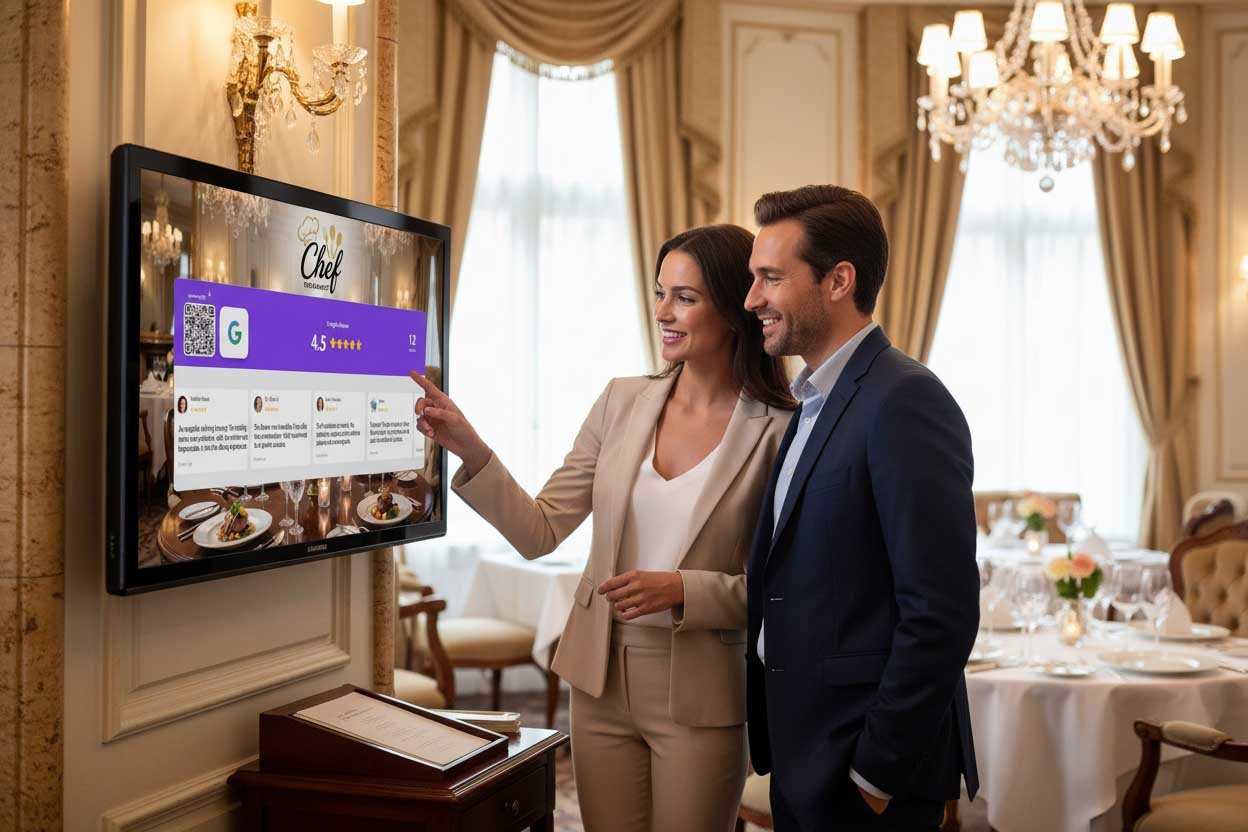
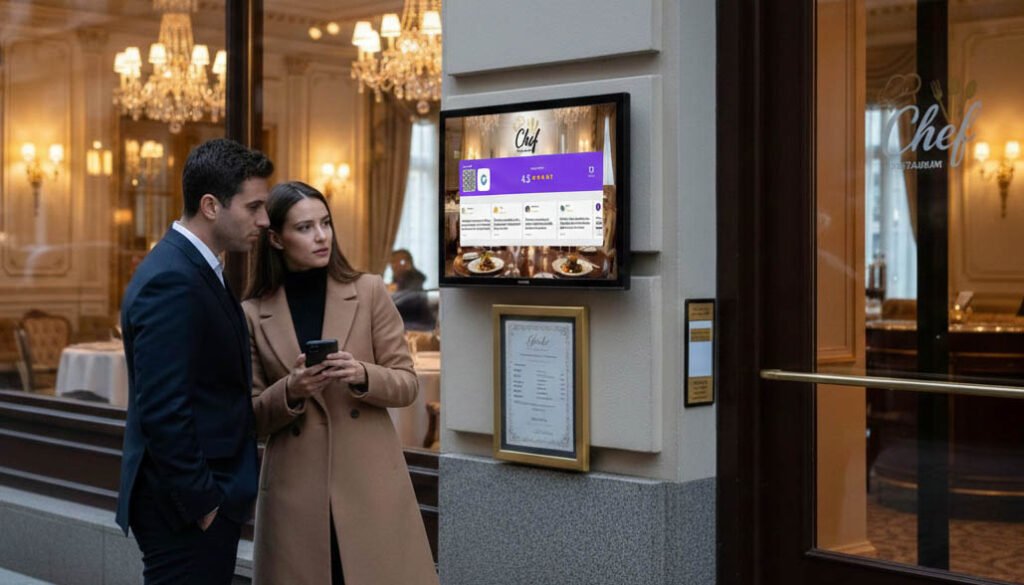
A QR code on the table changes this completely. Scan, tap, follow. Done before the check arrives. Some restaurants put a small screen near the entrance or bar showing their follower count with a QR code. Guests see “8,400 followers” and think, this place must be popular. Then they scan and add themselves to that number.
Your dining room is your best growth channel. Way better than hashtags or posting times or any other tactic people obsess over. You have a captive audience every single night. Use it.
You’re posting randomly whenever you remember
Consistency matters more than most restaurant owners want to admit.
Not because the algorithm punishes you for skipping a day. That’s mostly a myth. But because irregular posting signals to potential followers that you’re not really committed. They land on your profile, see the last post was three weeks ago, and assume you’re either closed or don’t care.
You don’t need to post every day. Three times a week is fine for most restaurants. But it needs to be steady. If you post five times one week and then disappear for a month, you’re worse off than posting twice a week consistently.
The restaurants that grow on social media usually have one person responsible for it. Not “whoever has time” or “the whole team.” One person who actually cares and has it as part of their job. If that’s nobody right now, that’s your first fix.
Your content is boring (sorry)
I don’t mean the food looks bad. I mean there’s nothing that makes me care about your specific restaurant.
Look at your last 20 posts. Could they belong to any restaurant in your city? If you swapped your logo for a competitor’s, would anyone notice?
Generic content gets generic results.
What actually works:
Show the humans. Your chef at 5am prepping. Your bartender perfecting a new cocktail. Your dishwasher who’s been with you for 15 years. People connect with people, not logos.
Show the chaos. A packed Friday night. Tickets flying. Controlled mayhem. That energy is interesting. A static plate is not.
Show the mistakes. The dessert that flopped. The time you ran out of something and had to improvise. Vulnerability builds connection faster than perfection.
Show your opinions. What do you think about food trends? What ingredients do you refuse to use? What’s overrated? Having a point of view makes you memorable.
The restaurant accounts that blow up aren’t the ones with the best photography. They’re the ones with the most personality.
You’re ignoring reviews entirely
Your Google reviews and your social media presence are connected. Not technically, but in how customers perceive you.
Someone finds you on Instagram, thinks you look interesting, then checks your Google rating before deciding to visit. If you have a 3.8 with a bunch of unanswered complaints, they’re going somewhere else. Doesn’t matter how good your Instagram looks.
Restaurants that actively manage their reviews see more conversions from social media. It’s all part of the same trust ecosystem.
Respond to reviews. All of them. Thank the positive ones briefly. Address the negative ones professionally. This shows potential customers you actually care.
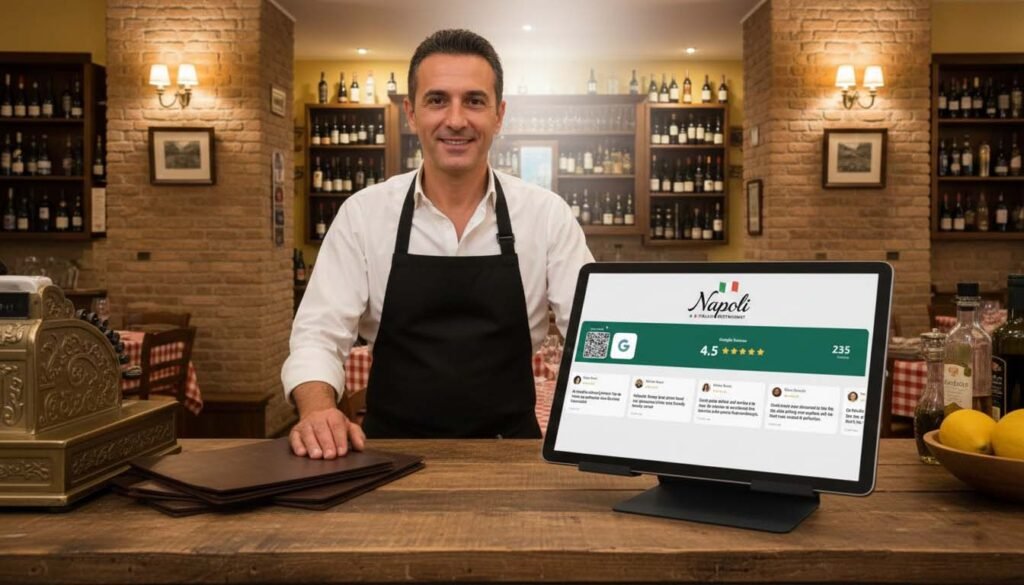
And make it easier to leave reviews in the first place. Same friction problem as followers. A QR code that goes directly to your Google review page removes all the steps. Scan, write, submit. You’ll get more reviews and they’ll skew more positive because satisfied customers are more likely to take action when it’s easy.
You’re not part of the local food community online
Instagram isn’t just a broadcasting platform. It’s a community. And most restaurants treat it like a billboard.
Your city has food bloggers. Local lifestyle accounts. “Best of” pages. Neighborhood accounts. These people have audiences full of exactly who you want to reach.
Are you engaging with them? And I don’t mean sending DMs asking for free promotion. I mean actually being part of the conversation. Commenting on their posts. Sharing their content when it’s relevant. Building real relationships.
When a local food blogger genuinely loves your restaurant and posts about it, that’s worth more than a month of your own content. Their audience trusts them. That trust transfers to you.
But it only happens if you’re a real participant in the community, not just a business account that only posts and never interacts.
The algorithm isn’t your problem
Every restaurant owner wants to blame the algorithm. “Instagram is suppressing business accounts.” “You have to pay to get reach now.” “It’s not like it used to be.”
Some of that is true. Organic reach has declined over the years.
But I see plenty of restaurant accounts growing just fine without paid promotion. They’re not hacking the algorithm. They’re just doing the basics well. Interesting content. Consistent posting. Engaging with their community. Converting in-person customers.
The algorithm is a convenient excuse for not doing the work.
How to actually fix it
If your restaurant’s social media isn’t working, here’s where I’d start:
First, fix the in-store conversion. Put QR codes on tables and near the register. Make following and reviewing a five second action. This alone can add 50 to 100 new followers per month without changing anything else about your content. If you want to go further, a display showing your live follower count and Google rating gives customers social proof and a reason to join in.
Second, assign one person. Social media can’t be everyone’s job because then it’s nobody’s job. Pick someone who actually enjoys it and make it part of their role.
Third, audit your content. Scroll through your last 30 posts and ask: would I follow this account if I didn’t work here? If the answer is no, your content needs a personality injection.
Fourth, engage locally. Spend 15 minutes a day commenting on posts from local accounts. Food bloggers, complementary businesses, neighborhood pages. Be a person, not a brand.
Fifth, respond to every review. Google reviews directly impact whether people choose you. Treat them as seriously as you treat the food.
None of this is complicated. Most restaurants just don’t do it consistently.
The real question
Social media for restaurants isn’t about going viral or getting millions of views. It’s about staying connected with your community and converting curious followers into actual diners.
If your current approach isn’t doing that, something needs to change.
Start with the easy wins. The QR codes. The review responses. The one assigned person. Get those basics right first.
Then worry about content strategy and hashtags and all the other stuff people overthink.
Your restaurant is probably great. Your social media just isn’t showing it yet.
