
Bridal Shop Marketing: How to Attract More Brides and Book More Appointments
A brideA bridal shop owner in Rotterdam told me she used to wonder why brides would drive past three competitors to reach her store. She had nice dresses. Good prices. Friendly staff. But so did everyone else.
Then she checked her Google reviews. 47 reviews, 4.3 stars. The shop two streets over had 280 reviews and 4.9 stars.
“I always thought reviews were something that just happened,” she said. “I didn’t realize you could actually build them.”
Eighteen months later, she has 340 reviews. Her Saturday appointments book out six weeks in advance. She raised her prices twice.
The dresses didn’t change. The trust did.
The Weight of a Wedding Dress Decision
Brides visit an average of three to five shops before choosing. That means you’re being compared constantly, usually before anyone walks through your door.
And this comparison happens online. A bride gets engaged, probably on a weekend. By Monday she’s searching “bridal shops near me” and scrolling through Google Maps results. She’s not reading your website copy. She’s counting stars and scanning review snippets.
A shop with 4.9 stars and 200 reviews feels different than one with 4.4 stars and 35 reviews. The first feels safe. The second feels risky. And when you’re about to spend a significant amount on a dress you’ll wear once, on the most photographed day of your life, you don’t take risks.
Social proof carries more weight in high-stakes emotional purchases than almost anywhere else. A bride isn’t buying a product. She’s buying confidence that she’ll feel beautiful on her wedding day. Reviews from other brides who felt that way become permission to believe she will too.
What Happens in the Fitting Room
Most bridal shops treat reviews as an afterthought. Something that happens organically, maybe, if a bride remembers to do it weeks later.
But the moment a bride says yes to a dress is the most emotionally charged moment of the entire customer journey. She’s standing in front of a mirror, probably crying a little, surrounded by her mom or her best friends who are also crying. Everyone is happy.
This is when the review should be planted. Not asked for aggressively. Planted.
A screen in or near the fitting area showing your existing reviews does something subtle but powerful. It normalizes the behavior. When a bride sees that 280 other women took the time to write about their experience, leaving a review shifts from “extra effort” to “what people do here.”
The Rotterdam shop owner added a screen showing her live Google reviews near the fitting rooms. Within the first month, her review velocity doubled. She wasn’t asking more. The display was asking for her.
The Waiting Room Nobody Thinks About
Brides rarely come alone. Mom is there. Maybe a sister, a best friend, a future mother-in-law. These people sit in your waiting area while the bride tries on dresses. They scroll their phones. They look around. They form opinions.
And their opinions matter. A hesitant mom can kill a sale. An enthusiastic best friend can close one.
What these people see while they wait shapes what they say when the bride steps out in a gown. A waiting area showing “4.9 stars from 280 reviews” creates a baseline of confidence before the bride even appears. Mom is already thinking “this place is good” before she sees the dress.
Compare that to a waiting area with outdated magazines and a muted TV playing the news. Same bride, same dress. Different psychological setup.
The Bride Who Almost Bought Elsewhere
One review the Rotterdam owner received stuck with her. A bride wrote that she had visited four other shops first, nearly bought at the third one, but decided to check Google reviews one more time before committing.
She saw the 4.9 rating. She saw a review mentioning the specific consultant who’d been recommended to her. She booked a last-minute appointment, found her dress in an hour, and wrote a review that same evening.
That bride would have bought elsewhere. The reviews pulled her back.
This is how reviews work in bridal. The decision timeline is long. Brides research for weeks or months. They bookmark shops, discuss options with friends, and second-guess themselves constantly. Your reviews are being read and re-read throughout this entire process. They work when your shop is closed, when you’re on vacation, when you’re not thinking about marketing at all.
Turning Appointments Into Reviews
The psychology of review collection depends heavily on timing. Ask too early and the bride hasn’t experienced enough. Ask too late and the emotion has faded. Ask at checkout and she’s distracted by payment and paperwork.
The right moment is immediately after she says yes. While she’s still in the dress, still glowing, still surrounded by happy people. A soft mention works better than a formal request. “We’d love to hear about your experience when you have a moment” lands differently than “please leave us a Google review.”
A follow-up email the next day catches her while the memory is fresh. Not a template. Something that references her actual appointment, maybe the dress she chose, maybe a moment that stood out. Brides can smell form letters. They respond to personal touches.
The post-wedding follow-up is the one most shops miss entirely. Three weeks after the wedding, a bride is in a reflective mood. The chaos is over. She’s looking at photos. She’s thinking about the journey. A thoughtful email asking about the day and inviting a review often produces the most detailed responses.
Instagram Is Your Portfolio
Wedding dresses are made to be photographed. Your Instagram feed is not a nice-to-have. It’s your portfolio.
But the feed itself is only half the equation. The other half is demonstrating that other brides follow you too.
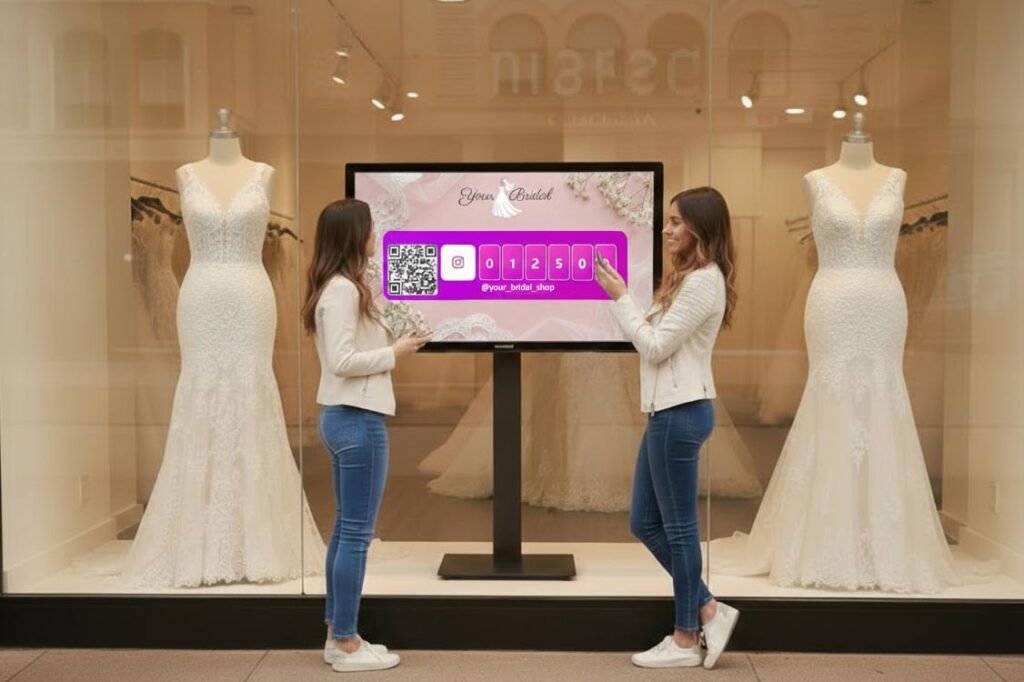
A display in your shop showing your Instagram follower count signals popularity. When a bride sees that 8,000 other people follow your account, she assumes those are brides who chose your shop. She wants to be part of that group. A QR code linking to your profile makes following effortless.
Every bride who follows you stays connected through her entire planning journey. She sees your posts, your stories, your real bride features. By the time her wedding day arrives, she feels connected to your brand in a way that transcends a single transaction.
Converting that foot traffic into followers takes almost no effort once the system is in place. Display. QR code. Done.
The Review Display Effect
Here’s what surprised the Rotterdam owner most. Displaying her reviews in the shop didn’t just impress visitors. It generated more reviews.
When brides see proof that other brides leave reviews, leaving one feels normal. Expected. Like signing a guest book at a wedding. You don’t question whether to do it. You just do.
A live display that updates when new reviews come in adds movement that static signs can’t match. When the count changes from 279 to 280 while someone is watching, it signals that this is happening right now. Active. Current. Real people participating in real time.
The shop owner told me she stopped counting after her review number passed 300. “It just keeps going now,” she said. “I don’t even think about it anymore. The system runs itself.”
Why Your Window Matters
Bridal shops in high-traffic areas often underestimate their window display. They show dresses, which makes sense. But they miss the chance to show trust.
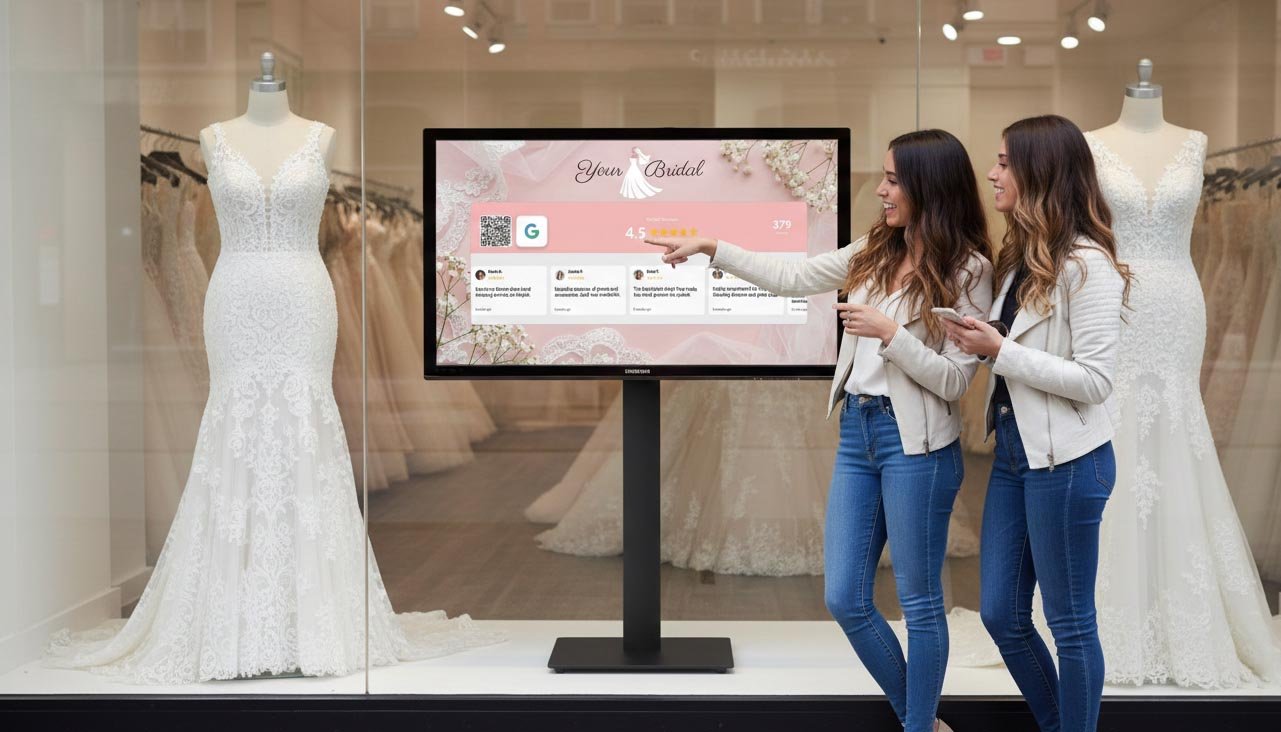
A simple display visible from outside – your rating, your review count, something like “4.9 stars from 340 happy brides” – catches eyes before anyone decides to come in. A bride walking past with her mom registers it subconsciously. When she later searches online and sees your shop in the results, she already has a positive association.
You can’t control which shops appear first in Google Maps. But you can control what impression you make on people who walk by your physical location.
The Competitive Gap
Most bridal shops still rely on word-of-mouth and beautiful dresses alone. They assume that quality speaks for itself and reviews just happen naturally over time.
This is true. Quality does matter. Reviews do accumulate naturally.
But “naturally” means slowly. And slowly means competitors who are actively building their review profiles will outpace you. A shop that starts with 50 reviews while you have 100 can pass you within six months if they’re systematic and you’re passive.
The Rotterdam owner’s competitor, the one with 280 reviews, didn’t have a magic secret. She just asked consistently and displayed prominently. That was enough to create a gap that took the first owner almost two years to close.
Building the System
The shops pulling ahead share a pattern. They display their reviews where brides and their entourages can see them. They show their social following. They ask at the right moments. They follow up when the emotion is still fresh.
None of this requires extra staff. None of it requires changing how you run your business. It’s infrastructure that works in the background, converting emotional moments into permanent proof that you’re the shop worth choosing.
The bride who books an appointment eight months from now will see everything you build today. The review you collect this Saturday will still be pulling in customers next year.
The Rotterdam owner put it simply. “I used to hope brides would find me. Now they drive past three shops to get here. That’s not luck. That’s trust people can see.”
Starting This Week
Check your Google rating right now. Count your reviews. Then check your closest competitor.
If they’re ahead, they’re winning brides you could be serving. If you’re ahead, you’re still leaving growth on the table if you’re not displaying that advantage inside your shop.
A screen showing your reviews near the fitting area. A QR code making it easy to leave feedback. A follow-up email that feels personal. These small additions compound over months.
The next bride who says yes to a dress in your shop is the next review waiting to happen. The question is whether your shop is set up to capture it, or whether that moment will pass and disappear like all the moments before.
