
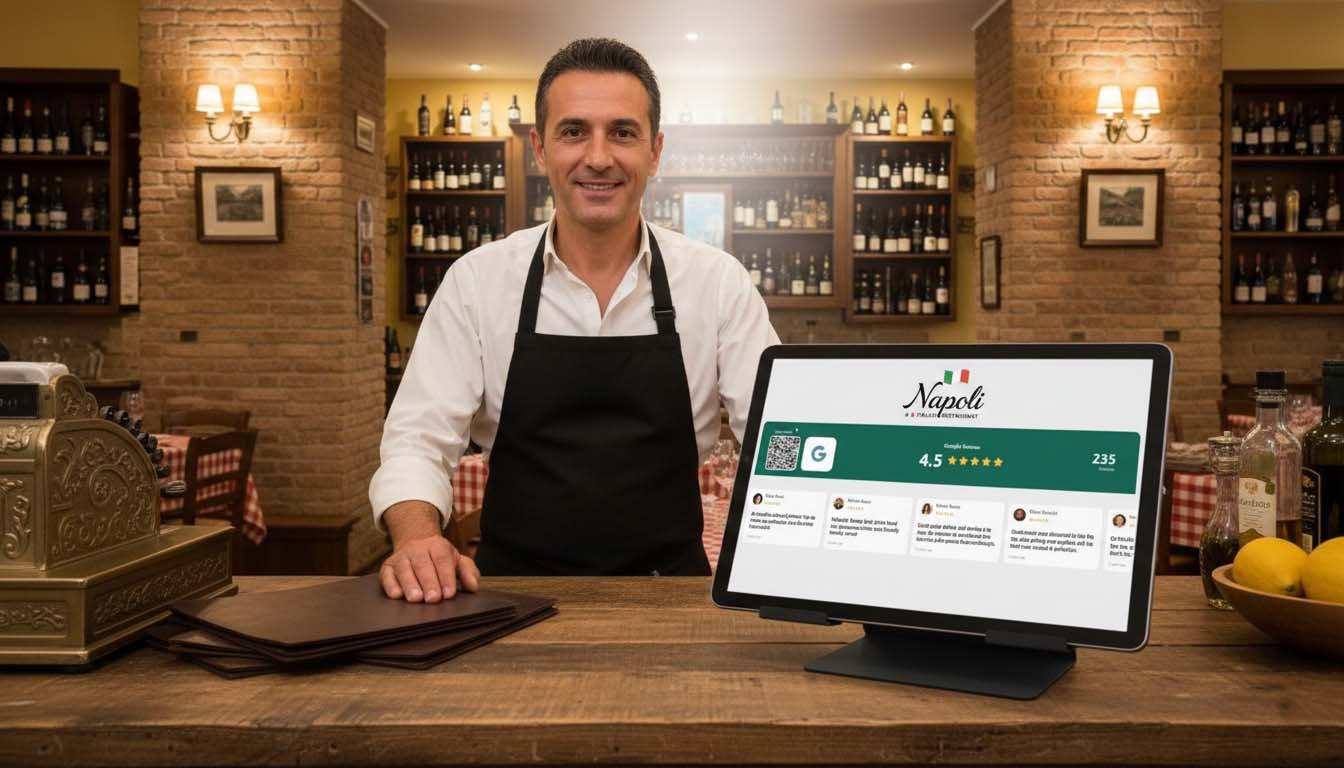
How to Get More Google Reviews for Your Italian Restaurant
Italian restaurants have something most places don’t. A built-in emotional connection.
Nobody has neutral feelings about Italian food. It’s Sunday dinners at grandma’s house. First dates over shared pasta. Vacation memories from that trattoria in Rome where you ate too much and regretted nothing.
When someone has a great meal at your place, they’re not just satisfied. They’re nostalgic. Happy. Maybe a little wine-warmed.
That’s the perfect state for leaving a review. You just need to ask at the right moment.
The Espresso Window
Here’s a moment most Italian restaurants waste.
Customer finishes their meal. Maybe they order an espresso or a limoncello. They’re full, relaxed, not rushing anywhere. The meal is complete. They’re sitting there, satisfied, probably reaching for their phone.
This is your window.
The server brings the espresso and says: “I hope the meal reminded you of Italy. If you have a second while you enjoy your coffee, we’d love a Google review. There’s a code right here.”
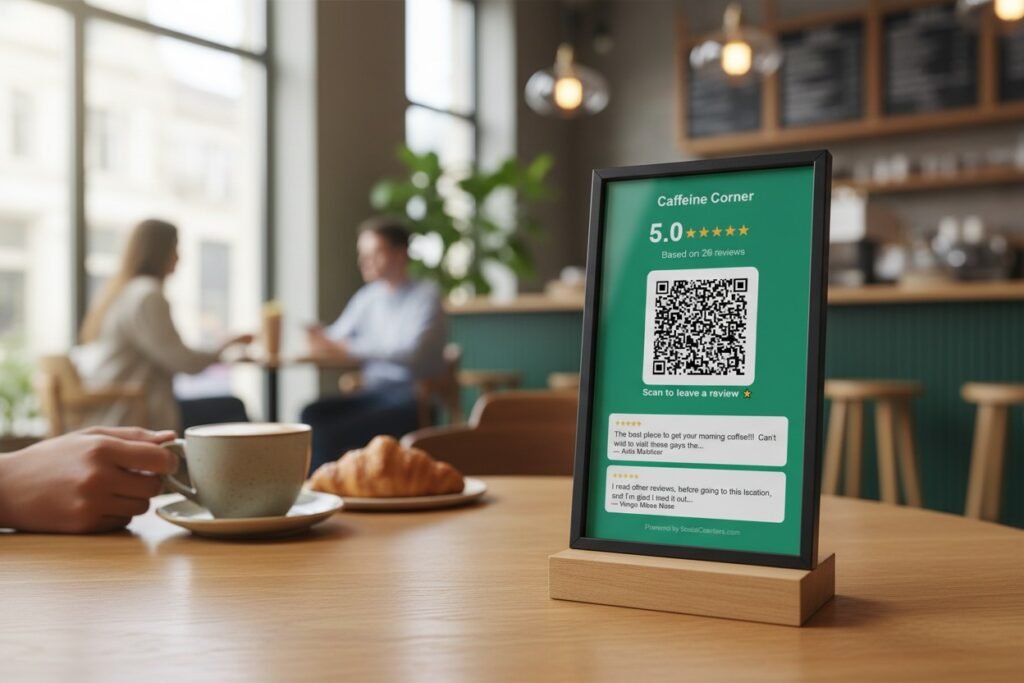
QR code on a small card. They scan, sip their espresso, type a few sentences. It’s not an interruption. It’s something to do during a natural pause.
The after-dinner moment is criminally underused. Everyone asks at checkout when people are fumbling for cards and ready to leave. The espresso moment is calm. Reflective. Perfect.
The “Just Like My Nonna” Redirect
You hear it constantly. “This tastes just like my grandmother used to make.” Or “I had something like this in Naples.” Or “This is the real thing.”
These comments are review triggers hiding in plain sight.
Train your staff to recognize them. When someone says anything comparing your food to authentic Italian memories, the response is:
“That’s the best compliment we could get. Would you mind sharing that in a Google review? It helps other people looking for the real thing find us.”
You’re not asking them to do you a favor. You’re asking them to share something they clearly feel strongly about. They wanted to tell someone. Now they can tell everyone.
The Bread Basket Strategy
The bread basket arrives. Fresh, warm, probably with olive oil and maybe some balsamic. Customers tear into it.
And then they wait. For antipasti. For the main course. There’s a gap.
This gap is usually dead time. But it’s also when people are in a good mood (warm bread does that) and have nothing to do except scroll their phones.
Put a subtle table tent near the bread. “Enjoying the bread? Wait until you try the main course. If you love it, leave us a review.”
With a QR code, obviously.
The magic here is planting the seed early. They see it, forget about it, then remember when they’re leaving happy. Or they scan it right there while waiting, get it half-done, finish after the meal.
The Doggy Bag Tell
Someone asks for a box to take food home. That’s a signal.
They didn’t finish, but they liked it enough to keep eating later. That’s a compliment. Probably a bigger one than cleaning their plate, actually. It means they want more.
When handing over the box: “Glad you’re taking some home! If you enjoyed it, we’d love a review. Here’s how.”
Card with QR code tucked in with the bag. They’ll find it when they open the box at home. Second chance at the review.
Some will do it while reheating leftovers at midnight. Weird but true.
The Famiglia Angle
If your restaurant has any family history, use it.
Recipes from your actual grandmother. Photos of the original restaurant in Brooklyn or the village in Sicily. Your mom still making the meatballs every morning.
This story makes reviews feel meaningful. People aren’t reviewing a business. They’re supporting a family. They’re preserving a tradition.
“We’ve been making this sauce the same way since my great-grandmother brought the recipe from Calabria. When people share that in reviews, it means everything to our family.”
That’s not a generic ask. That’s a story someone wants to be part of.
No family history? That’s okay. “Small family-owned restaurant competing against chains” still works. People like helping the underdog.
The “For the Table” Approach
Italian dining is communal. Shared plates. Family style. Everyone reaching across the table.
Use that energy.
Instead of asking one person for a review, ask the table. “If everyone had a good time tonight, one review from your group would mean a lot. You can pass this around.”
Single QR code card for the table. Someone will volunteer. Usually the person who organized dinner or made the reservation. They feel responsible for the group’s experience.
Group validation works too. If everyone agrees out loud that dinner was great, the social pressure makes someone actually do it.
The Birthday Tiramisu Moment
Birthday tables are guaranteed happy customers. You already know they’re celebrating. You probably brought out a candle in something.
After the birthday dessert, after the singing, when everyone’s taking photos:
“Happy birthday again! If you want to remember tonight, tag us on Instagram. And if you have a second, a Google review mentioning the celebration would make our day too.”
They’re documenting anyway. Add the review to the documentation process. It becomes part of capturing the memory, not an extra task.
The Sunday Regular Paradox
Your most loyal customers probably haven’t reviewed you.
They come every Sunday. They’ve spent thousands at your restaurant over the years. But review? Never occurred to them. They don’t think of you as a business needing reviews. You’re just where they eat.
These people need a direct ask.
“You’ve been coming here for what, three years now? You’re practically family. We’d love it if you left a Google review. Nobody’s opinion matters more than our regulars.”
Flattering but true. And regulars usually write the best reviews because they actually know the place.
The Display Trick
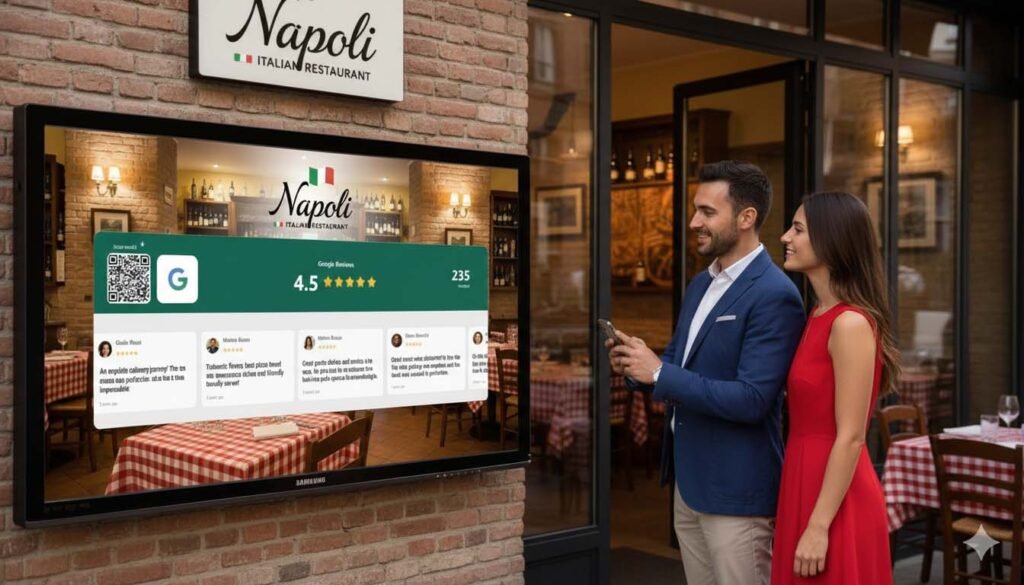
Put a screen somewhere visible. Entrance works. Bar area works. Wherever people linger.
Show your Google rating and review count. “4.6 stars from 347 reviews.” Live, updating.
This does something psychological. It signals that reviewing is normal here. Other people do it. The number creates permission.
Pair it with a QR code nearby. The screen creates the “why should I?” The QR code provides the “here’s how.”
The Check Presenter Insert
Simple but effective.
When you put the bill in that little folder or tray, include a card. “Grazie! If you enjoyed your meal, a quick Google review helps us more than you know.”
QR code on the card.
They’re sitting there waiting for the card to process or deciding on tip percentage. Nothing else to do. Some will scan.
Keep the card nice. Not a cheap printed slip. Something that feels intentional. Maybe with your logo. This is the last impression before they leave.
The “How Was Everything?” Evolution
Servers ask “how was everything?” constantly. It’s automatic. Customers say “great” automatically. Both parties move on.
Change the script slightly.
“How was everything? Actually, what was your favorite dish tonight?”
Forces a real answer. They have to think. Name a specific thing. Now they’re engaged.
“The carbonara? That’s our most-reviewed dish. People love writing about it. If you have a second later, we’d love your take.”
Now the review has a focus. They’re not writing a generic “food was good.” They’re writing about the carbonara specifically. Easier task. Better review.
What Makes Italian Different
Italian restaurants have unfair advantages for reviews:
The emotional connection. Nobody tears up remembering a good sandwich. But a perfect cacio e pepe can genuinely move people. Emotion drives sharing.
The social setting. Italian dining is inherently communal. Groups, families, dates. More people at the table means more potential reviewers.
The pace. Multi-course meals with natural pauses. Espresso after. Digestivo maybe. Time to breathe, reflect, and yes, leave a review.
The story. Every Italian restaurant has one. Family recipes. Regional specialties. The old country. Stories give reviews meaning.
Use what you have. The warmth, the hospitality, the sense that customers are guests in your home. That’s the foundation.
The QR codes and displays just make acting on it easy.
