
How Local Businesses Actually Get Their First 1,000 Instagram Followers
A thousand followers sounds pathetic compared to influencers with millions. But for a local business? That first thousand changes everything.
Below a thousand, your profile looks like you opened last week. Maybe you did, maybe you didn’t. Doesn’t matter. People scroll through, see 247 followers, and wonder if you’re still in business.
Above a thousand, something shifts. You look established. Real. The kind of place people actually go to.
Getting there is harder than the Instagram gurus make it sound. You’re not posting dance trends. You’re not a celebrity. You’re running a bakery or a gym or a salon and you have maybe twenty minutes a day for this stuff.
But you can absolutely hit 1,000. You just need a different approach than what works for influencers.
The Advice That Doesn’t Help You
“Post consistently. Use hashtags. Engage with your audience.”
Not wrong. But useless when you’re starting from 73 followers and 60 of them are friends and family.
Engage with what audience? The one that doesn’t exist yet?
The real question nobody answers: how do you get in front of people who don’t know you exist?
For local businesses, the answer is sitting right in front of you. Literally. People walk into your store every single day.
Your Unfair Advantage
Online-only brands have to fight for every follower through content and ads. You have foot traffic.
Every customer who visits you is already a fan. They spent money. They chose you over alternatives. They’re the warmest audience you’ll ever find.
But they leave without following you. Not because they don’t like you. Because it never crossed their mind.
The problem is friction. To follow you, they’d have to remember your handle, open Instagram, search for it, find the right account among duplicates, and tap follow. That’s five steps too many. They’ll forget by the time they reach their car.
Make it a five-second decision instead.
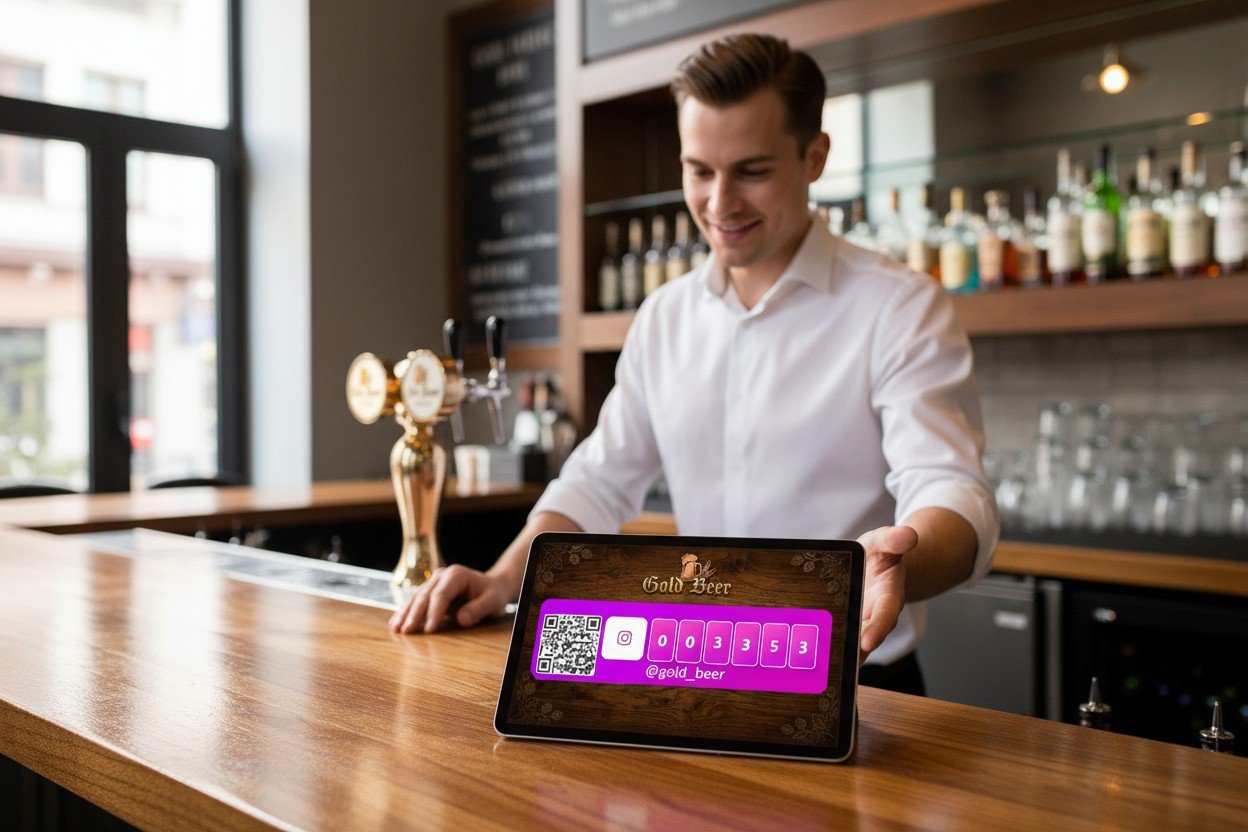
A QR code at checkout. Customer scans, taps follow, done. No typing, no searching, no remembering.
One coffee shop I know added 25-30 followers per week just from a QR code stand. That’s 100+ per month. From people who were already there anyway.
Some businesses add a screen showing their follower count. Something about seeing “1,847 followers” makes people want to join that number. Social proof working in real time.
The point: stop hoping customers find you online. Capture the people already standing in your space.
A thousand followers sounds like nothing when you see influencers with millions. But for a local business, that first thousand is everything.
It’s the difference between looking like you just opened yesterday and looking like an established place people actually go to. It’s the threshold where your profile stops feeling empty. Where potential customers scroll through and think “okay, this place is legit” instead of wondering if you’re still in business.
Getting there is harder than the Instagram gurus make it sound. You’re not posting viral dances. You’re not a celebrity. You’re a bakery, a gym, a salon, a restaurant. Your content isn’t going to blow up overnight.
But you can absolutely get to 1,000. It just takes a different playbook than what works for influencers.
The “just post good content” advice is incomplete
You’ve heard this a million times. Post consistently. Post quality content. Use hashtags. Engage with your audience.
It’s not wrong. But it assumes you already have an audience to engage with. When you’re starting from 50 followers and 40 of them are friends and family, “engage with your audience” doesn’t really help.
The real question is: how do you get in front of people who don’t know you exist yet?
For local businesses, the answer is different than for online brands. You have something they don’t. A physical location where real humans show up every day.
That’s your unfair advantage. Most local businesses completely ignore it.
Start with the people already walking through your door
This sounds obvious but almost nobody does it well.
Every customer who visits your store, eats at your restaurant, or uses your service is a potential follower. They already like you enough to spend money. They’re the warmest audience you’ll ever have.
The problem is friction. They’d have to remember your Instagram handle, open the app, search for you, find the right account, and tap follow. Too many steps. They’ll forget by the time they get to their car.
You need to make following you a five-second decision.
A QR code at the checkout counter or on the table works. Customer pulls out their phone, scans it, taps follow, done. No typing, no searching, no forgetting.
I’ve seen coffee shops add 20-30 followers per week just from a simple QR code stand. That’s 80-120 per month. From customers who were already there anyway. The friction reduction makes all the difference.
Some businesses take it further with screens showing their live follower count. There’s something about seeing “2,847 followers” on a display that makes people want to be part of that number. Social proof working in real time.

Building Your Foundation (The Unsexy Part)
Before growth tactics matter, you need a base. An empty profile won’t convert anyone no matter how good your content is.
Your first 200-300 followers come from:
People who already know you. Friends, family, that guy from your networking group. Ask them directly. “Hey, trying to grow our Instagram, would mean a lot if you followed.” Not glamorous. Very effective.
Your existing customer list. Email subscribers, WhatsApp contacts, loyalty program members. One message to your list can add 50-100 followers overnight.
Staff and their circles. Employees follow you, share your posts, their friends see it. Some of those friends become customers.
Other local businesses. The florist down the street. The photographer who shoots weddings in your area. Follow them, comment on their stuff genuinely, many follow back. Not as a tactic. As a neighbor.
This gets you to 200-300 without any “strategy.” Your profile no longer looks abandoned. Now the real work starts.
What to Actually Post
I’m skipping the content calendar templates. Those assume you have hours to plan. You don’t. You’re running a business.
Here’s the only thing that matters: show what makes YOUR place different.
Bakery that makes everything at 4am? Show your baker pulling croissants from the oven, flour everywhere, looking half-dead. That’s interesting. A polished photo of croissants on a marble counter? That’s stock photography. Nobody cares.
Gym with a tight community? Show the 6am regulars. The guy who’s been coming for three years. The coach being a human, not a headshot.
Restaurant with a supplier you’re proud of? Show the farmer dropping off produce. The chaos of Friday night rush. The quiet moment before service starts.
The mistake I see everywhere: local businesses posting like corporations. Generic photos, safe captions, zero personality. It doesn’t flop because it’s “bad quality.” It flops because it could be anyone. Nothing makes someone think “I need to follow THIS place specifically.”
Your phone is fine. Your lighting doesn’t need to be perfect. Show something real about your specific business. That’s it.
Hashtags (The Local Version)
Hashtag advice for local businesses is completely different than for online brands.
You don’t want #food or #fitness. Millions of posts. You’ll disappear instantly.
Go local instead:
- Not #coffee → #[yourcity]coffee
- Not #hairsalon → #[yourcity]hairstylist
- Not #restaurant → #[yourcity]eats
Check what successful local businesses in your area use. See what local food bloggers tag. Copy those.
Mix it up: a few broad local tags, a few neighborhood-specific ones, a few describing what you do. Somewhere between 5-15 total. The exact number doesn’t matter. Using tags people in your area actually follow does.
The Local Community Game
This is where most local businesses miss massive opportunities.
Your area has local Instagram accounts. Food bloggers. “Best of [city]” pages. Neighborhood accounts. Event listings.
These accounts need content constantly. That’s their whole business model. They want to feature local spots because that’s what their followers want to see.
Start engaging with them. Not “please feature me” energy. Just genuine interaction. Comment on posts. Share their stories. Be part of the community.
After a while, reach out. Invite them to try your food, your service, whatever. Not in exchange for a post. Just because you’d like feedback.
Some will post about you. Some won’t. The ones who do will send followers who are exactly your target: people interested in local spots in your area.
This beats paid influencer campaigns because it’s real. The local food blogger posting about your restaurant isn’t doing a #ad. They actually went, actually liked it, actually recommend it.
Cross-Promotion With Other Businesses
You’re not competing with the gym down the street. You’re all competing with chains and Amazon.
Partner up.
The coffee shop features pastries from the local bakery. Both post about it. Both audiences discover the other.
The gym partners with the meal prep service. The salon collaborates with the jewelry maker. The restaurant showcases wine from a nearby vineyard.
Joint giveaways work too. “Follow both accounts to enter.” You get their audience, they get yours.
Think about who serves your same customers without competing directly. Those are your partners.
The Part Nobody Wants to Hear
There’s a compounding effect that takes time.
Month one: you post, almost nobody sees it. Depressing.
Month six: some posts get saved and shared. A local account features you. Customers start tagging you in stories.
Month twelve: real following. People recognize your content. You show up in local hashtag feeds. Algorithm treats you like a legitimate account.
Most local businesses quit in month two or three. They post for a few weeks, see minimal results, decide Instagram “doesn’t work.”
The ones who hit 1,000+ just stuck around longer. Not better content. Not better strategy. Just consistency.
Unsexy but true.
What Doesn’t Work
Skip these:
Buying followers. Random accounts from other countries who will never visit. Your engagement craters. Algorithm notices. Worse than useless.
Follow-unfollow. Following hundreds hoping they follow back, then unfollowing. Worked in 2016. Makes you look desperate now.
All promotional content. “10% off this weekend!” every post. People don’t follow businesses to see ads.
Obsessing over posting times. Yes, “optimal times” exist. The difference is marginal. Great post at bad time beats mediocre post at perfect time.
Comparing to national brands. They have marketing teams. You have yourself. Different game.
From 500 to 1,000
Once you hit 500, growth usually accelerates. You’ve proven to the algorithm you’re real. You’ve built some local recognition.
Double down on what’s working. Check your insights. Which posts got saves and shares? More of that. Which flopped? Less of that.
Keep converting in-store customers. This never stops being your most reliable channel. Display your follower count if you can. Something about watching that number climb motivates everyone.
Try Reels if you haven’t. Instagram pushes them harder than static posts. They don’t need to be complicated. A 10-second behind-the-scenes clip often outperforms a carefully shot photo.
And keep engaging locally. Comments on other accounts. Stories you share. Relationships you build. It compounds.
After 1,000
Hitting 1,000 is a milestone, not the finish line.
But things shift. Your profile looks credible. You show up in more explore pages. Local customers notice. Sometimes brands reach out for partnerships.
The tactics that got you to 1,000 will get you to 5,000. Same principles. Just keep going.
The businesses that grow fastest are the ones who build Instagram into their operations. Not a separate “marketing task.” Just part of running the business. Interesting things get captured. Customer interactions become content.
That mentality matters more than tactics.
The Timeline
Expect 3-6 months to hit 1,000 if you’re consistent. Maybe longer. Maybe shorter if you’re in a photogenic industry or get featured somewhere.
Don’t rush it. Don’t buy your way there. Don’t compare yourself to accounts that have been around for years.
Keep showing up. Keep capturing in-store customers with QR codes. Keep being part of your local community online.
The thousand will come. And it’ll be a real thousand. People who actually live near you, care about your business, and might walk through your door tomorrow.
That’s worth more than a million random followers who’ll never visit.
