
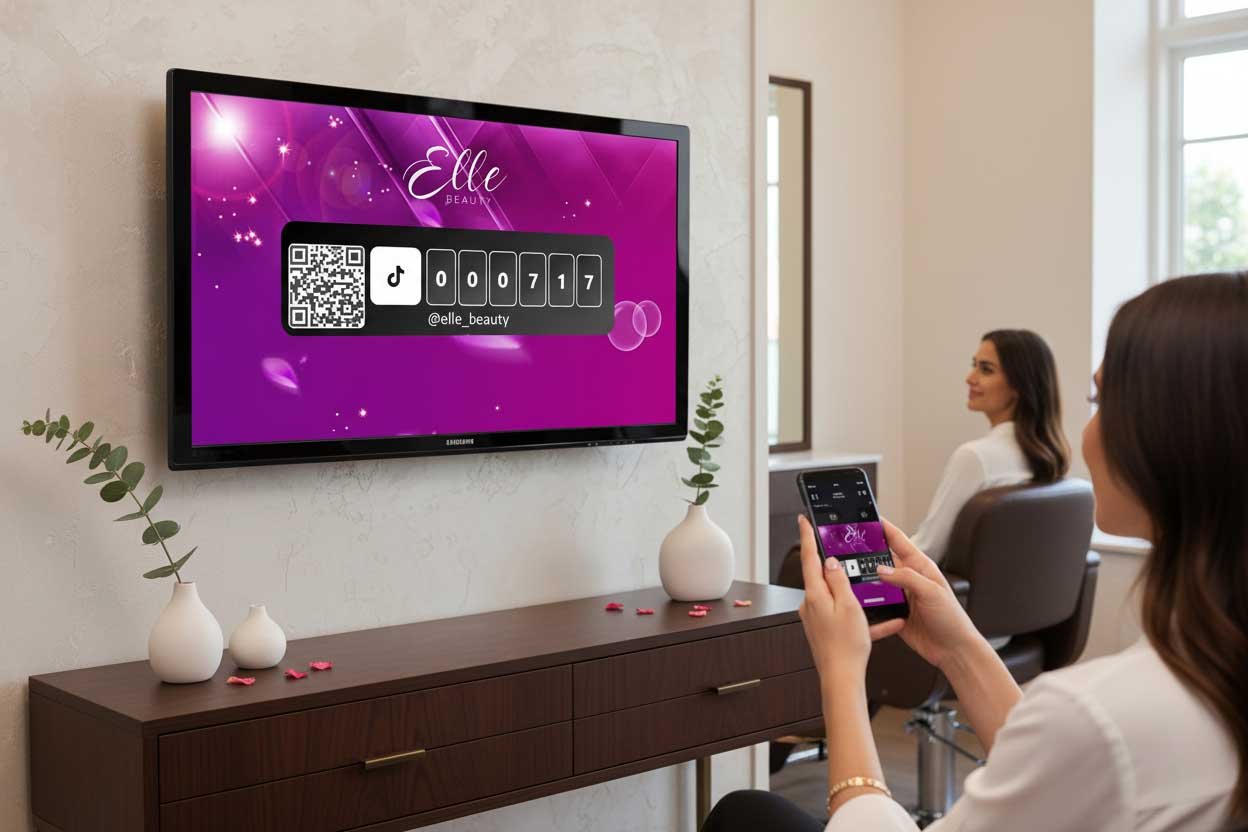
How to Display a Live TikTok Follower Counter in Your Store
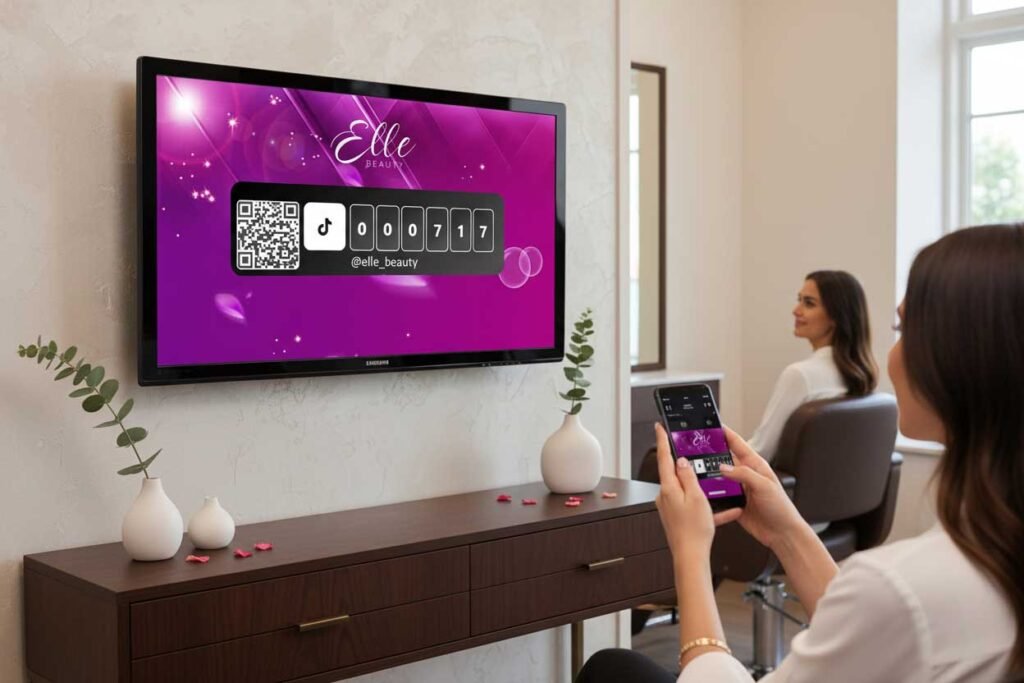
A sneaker store owner in Amsterdam showed me something interesting last year. A small screen behind the register. Nothing fancy. Just his TikTok follower count updating in real time, with a QR code underneath.
He’d put it up three months earlier when he had around 700 followers. When I visited, the number read 3,247.
No ads. No influencer partnerships. No change in content strategy. Just a screen that made the follower count visible to people already walking through his door.
The math, when he explained it, was almost embarrassingly simple. Maybe 200 customers come through daily. If 5% scan the code, that’s 10 new followers per day. Three hundred per month. Over a year, a modest local following turns into something substantial.
Why the Number on the Wall Works
There’s something specific about watching a count grow. Static numbers feel like facts. A sticker that says “Follow us on TikTok” sits there, inert, easy to ignore. A live count feels like momentum.
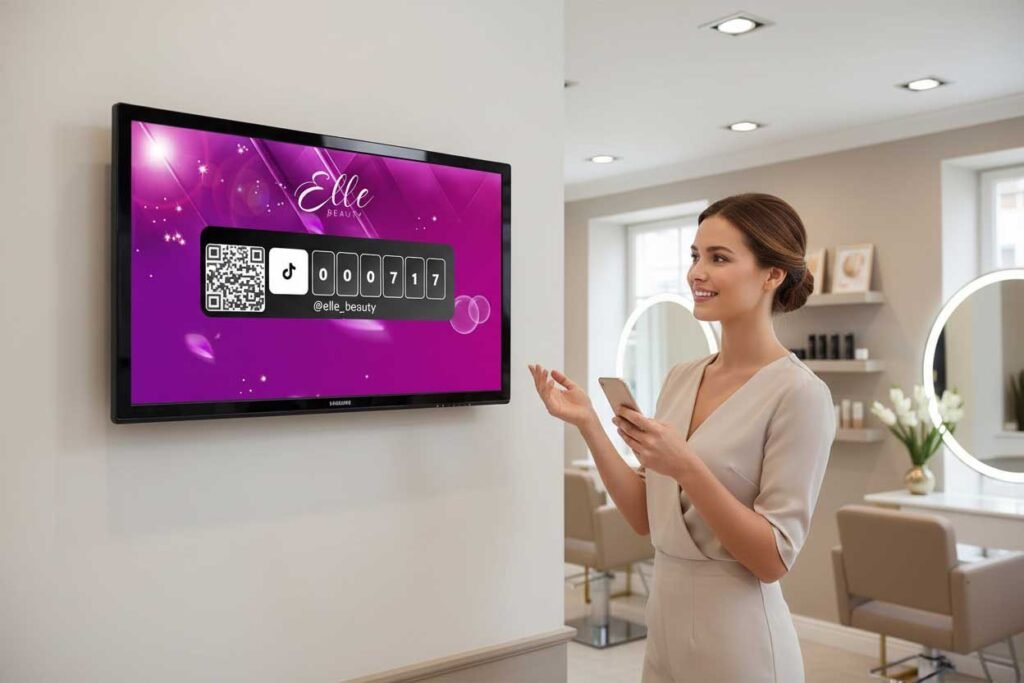
When a customer sees the number tick up while they’re in the store, they witness other people making the same decision they’re considering. That’s social proof in its purest form. Not a claim. Not marketing copy. Just visible evidence that others are participating.
The sneaker store owner noticed something he hadn’t expected. Customers would watch the screen while waiting to pay, almost like a stock ticker. When the number moved, some of them would pull out their phones immediately. The movement triggered action in a way that static signage never did.
The Size of the Number Matters Differently Than You’d Think
A count of 847 communicates something different than a count of 14,000. Both can motivate follows, but through different psychology.
The smaller number appeals to people who want to discover things first. Early adopters. The crowd that likes finding something before everyone else does. “Only 847 followers? This is going to blow up and I’ll be one of the originals.”
The larger number appeals to the majority who want validation. “14,000 people already follow this store. I should probably see what they’re posting.”
The Amsterdam store owner told me his engagement actually increased after passing 2,000. Something about that threshold made people take the account more seriously. Below it, TikTok felt like a side project. Above it, it felt like a real channel worth following.
Where You Put the Screen Changes Everything
The register works for most stores. Customers are stationary, often waiting, already in a buying mindset. They’ve committed to a purchase. Following on TikTok feels like a small additional step, not a separate decision.
But register placement isn’t always optimal. A fitting room catches customers in a different mental state. They’re evaluating. Considering. Engaged with the brand in a way that browsing customers aren’t. A screen showing your TikTok presence during that moment connects the in-store experience to something that continues after they leave.
Entrance placement builds awareness but converts less reliably. Customers haven’t experienced your store yet. They don’t know if they like you. The number might intrigue them, but the actual follow usually happens later, after something positive has happened.
Some stores run multiple displays. Entrance for awareness. Fitting room for engagement. Register for conversion. The redundancy works because each placement catches customers in a different headspace.
The difference between a static sign and a live display shows up clearly in these placement tests. A laminated “Follow us on TikTok” sign at the register gets ignored. The same message with a live updating number gets attention.
Making the Follow Effortless
A follower count without an easy way to follow is a missed opportunity. QR codes solve this, but execution matters more than most stores realize.
The code should open your TikTok profile directly. Not a landing page. Not a link tree. Every additional tap loses people. The sneaker store owner tested this. His original setup went through a link aggregator. Switching to a direct TikTok link doubled his scan-to-follow rate.
Size the code so phones can scan it from where customers actually stand. Too small and they struggle. Too large and it looks awkward. Test it yourself from realistic distances.
Some stores add a small hook. “Follow for early access to drops” or “TikTok followers see new stock first.” The incentive doesn’t need to be substantial. It just needs to give people a reason beyond the implicit one.
A QR code generator designed for social follows handles the technical details. The harder part is making sure the code is visible at the right moment, when the customer is most likely to act.
What Happens After the Follow
Getting the follow is half the equation. Keeping the follower means posting content worth watching.
The Amsterdam store owner posts three types of content. New inventory arrivals, shot quick and casual on his phone. Customer fits, with permission, reposted to his main feed. Behind-the-scenes stuff that shows what running a sneaker store actually looks like.
None of it is polished. None of it costs money to produce. That’s the point. TikTok rewards authenticity in a way that Instagram doesn’t. A shaky phone video of unpacking a new shipment outperforms a professionally shot product showcase.
Trending sounds matter more on TikTok than other platforms. The algorithm pushes content that participates in current trends. You don’t need to be first, but timing matters. A trend that peaked last week won’t get the same distribution as one that’s rising now.
Connecting Physical and Digital
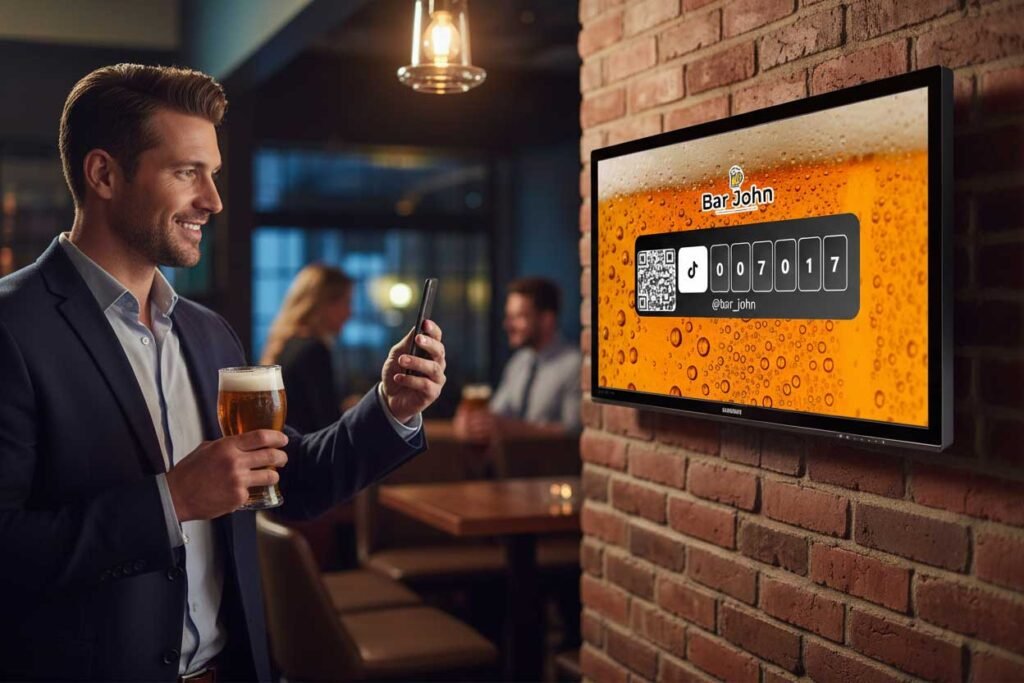
Converting foot traffic into followers creates something valuable beyond the follower count itself. You build a direct line to people who’ve already visited your store.
New product announcements reach them instantly. Sale notifications land in their feed. Event invitations feel personal because they’ve been to your physical space. The relationship that started at the register continues online indefinitely.
The sneaker store owner uses this channel for releases now. Instead of hoping customers check his website, he posts to TikTok and watches them show up. “They feel like they’re getting inside information,” he said. “Even though the post is public.”
Cross-promotion creates a loop. Post about the in-store display on TikTok. “Come watch the counter grow.” Online followers become in-store visitors who scan the code and encourage others to follow. The physical and digital feed each other.
Staff Make the Difference
The display provides the reminder. Staff provide the personal touch.
A genuine mention from someone who just helped a customer carries weight. “We just posted a video of these exact shoes, follow us on TikTok if you want to see how people are styling them.” Natural. Relevant to what the customer already cares about.
The Amsterdam store owner doesn’t script it. He just told his staff that the TikTok matters and let them figure out how to mention it in ways that feel authentic. Some do it constantly. Some rarely. Both work because neither feels forced.
The Compound Math
One week of data tells you almost nothing. One quarter reveals patterns worth acting on.
The sneaker store owner tracks follower growth weekly now. He can see the effect of specific posts, specific events, specific placements. Weekends convert better than weekdays. Release days spike the count. Slow Tuesday afternoons barely move the needle.
The larger insight is that follower growth compounds. Every follower you gain today sees every post you make tomorrow. A video that would reach 1,000 people when you had 700 followers reaches 5,000 when you have 3,500.
Unlike paid advertising, which stops the moment you stop paying, follower counts only go up. The screen at the register keeps working whether you’re thinking about it or not. That’s the difference between rented attention and owned audience.
Starting Simple
You don’t need elaborate technology to test this. A tablet mounted near the register, running a counter display, costs a few hundred dollars and takes an afternoon to set up.
Run it for a month. Track the results. If follower growth accelerates, invest in something more permanent. If it doesn’t, you’ve learned something about your specific customer base without significant commitment.
The stores seeing the biggest impact share something in common. They treat the display as part of their customer experience, not a marketing gimmick bolted on. When the counter feels like a natural extension of the brand, customers engage naturally. When it feels like an intrusion, they walk past it.
The Amsterdam sneaker store owner is past 5,000 followers now. He added a second screen near the fitting area last month. The register display still converts better, but the fitting room catches people he was missing before.
“I used to think TikTok was for big brands with content teams,” he said. “Turns out it’s just about making it easy for people who already like you to follow you.”
