Digital Signage in Retail: Beyond the Slideshow
A furniture store in Utrecht spent €8,000 on a beautiful 65-inch display near their entrance. For two years, it cycled through product photos. Customers walked past without looking up. The owner told me he considered it a failed investment.
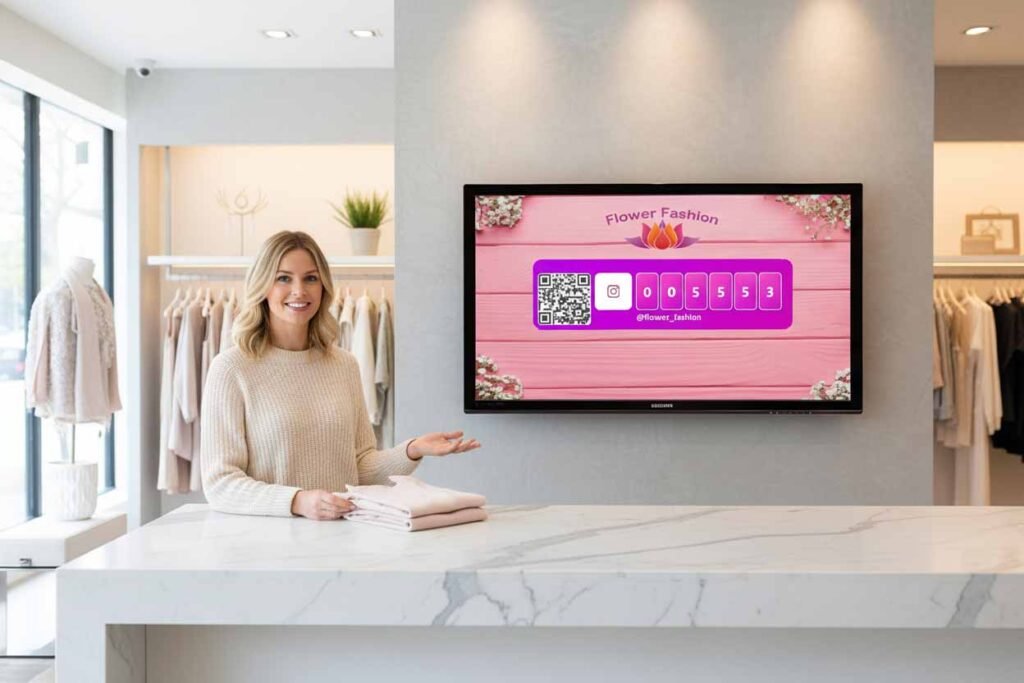
Then he changed what was on the screen. Instead of product photos, he showed the store’s Instagram follower count updating live, alongside a QR code to follow. In the first month, his Instagram grew by 1,400 followers. More importantly, customers started stopping to look at the screen. Some pointed it out to whoever they were shopping with. The same hardware, completely different results.
The screen was never the problem. The content was.
Why Static Content Fails
Product slideshows made sense when digital screens were novel. People would stop to watch anything moving. That novelty wore off years ago. Customers have trained themselves to ignore screens showing promotional content because promotional content is everywhere.
Real-time information commands attention because it offers something genuinely useful. A weather-triggered promotion feels relevant in a way that a generic sale sign never can. A countdown timer creates urgency that a “limited time offer” claim does not. A live follower count provides social proof that validates the customer’s presence in your store.
The distinction matters. Static content competes with every other advertisement the customer has seen that day. Dynamic content provides information they can only get right now, in this space.
The Follower Count Effect
Displaying a live social media count does something subtle but powerful. The number itself signals credibility. Fourteen thousand followers means fourteen thousand people decided this brand was worth their attention. That’s a data point customers process unconsciously.
When the number ticks up while someone is watching, the effect intensifies. They’re witnessing other people making the decision to follow in real time. This triggers the same herd behavior that makes busy restaurants seem more appealing than empty ones.
Placement determines effectiveness. Near the entrance, the count creates a first impression of legitimacy. Near the register, it catches customers during a natural pause, giving them something to do while waiting. In fitting rooms, it reaches customers already in a decision-making mindset.
The QR code beside the counter removes every friction point from following. No searching, no typing, no remembering to do it later. Three seconds and done.
Reviews in Physical Space
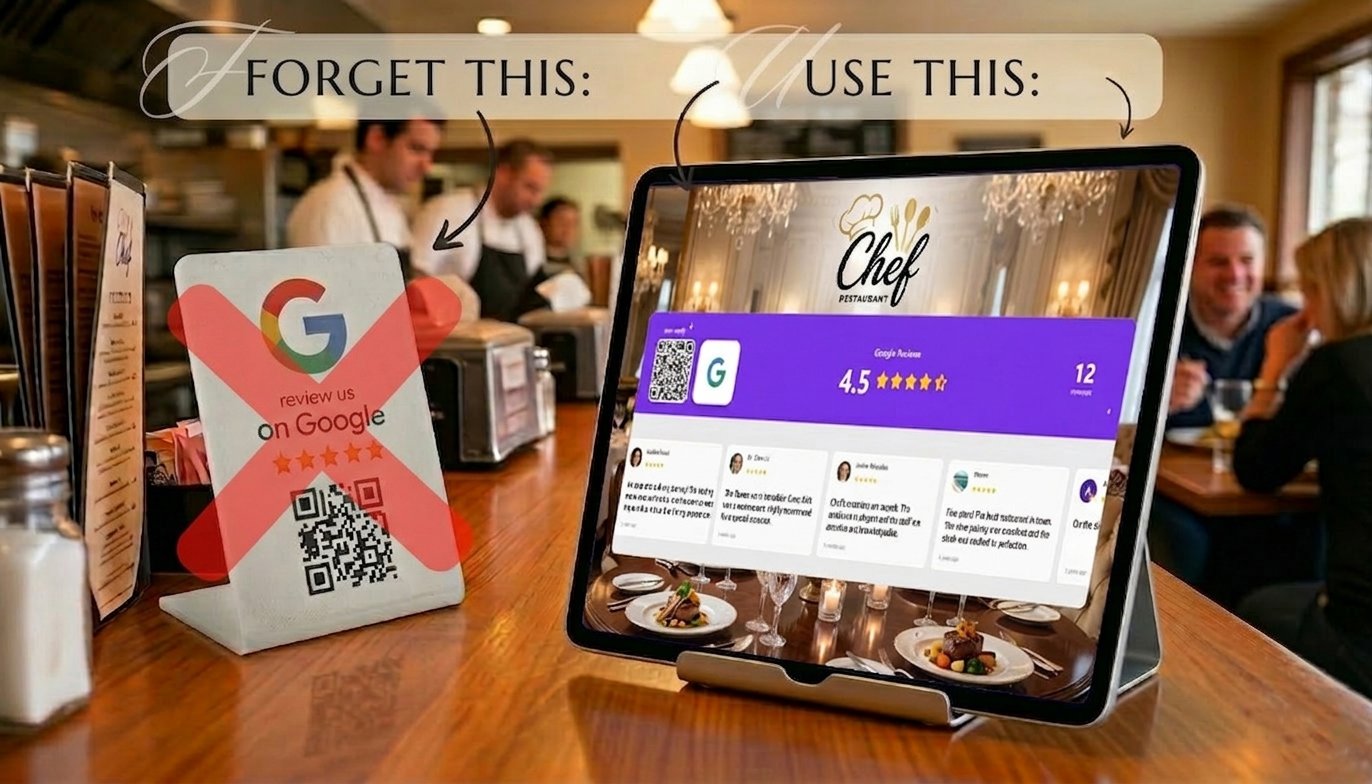
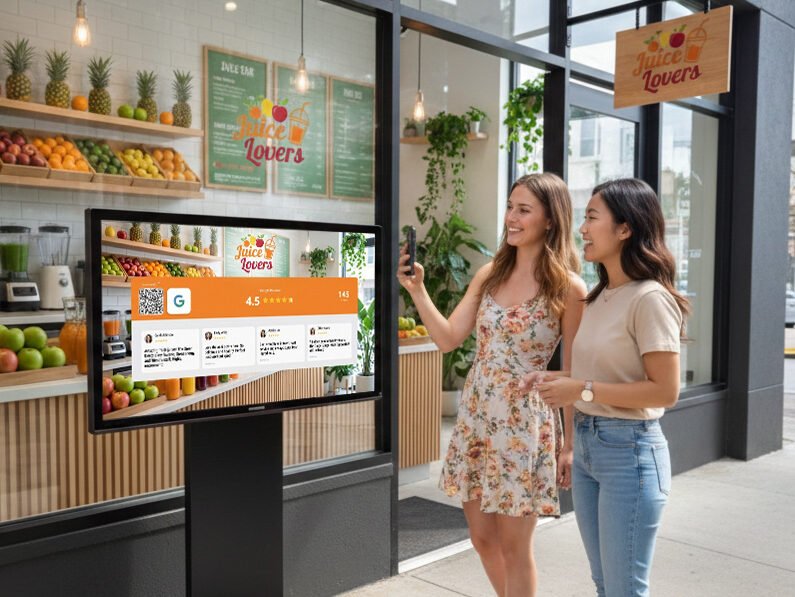
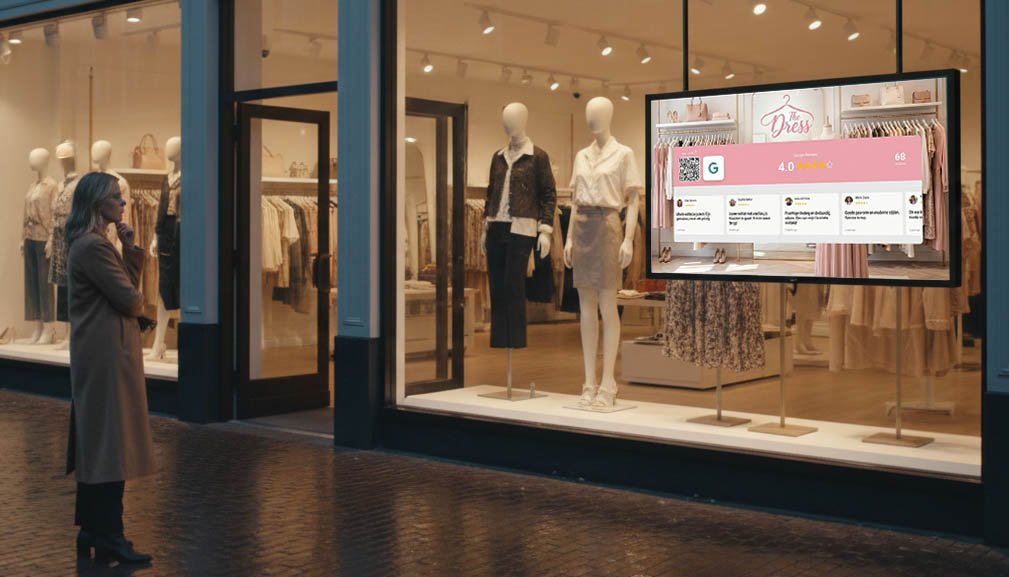
Google reviews live on Google. Yelp reviews live on Yelp. Customers might find them eventually, or they might not. Bringing those reviews into your physical space puts social proof directly in front of people while they’re making purchase decisions.
A rotating display of customer reviews accomplishes two things. It reassures hesitant buyers that others have had good experiences. And it normalizes the behavior of leaving reviews. Customers who see reviews displayed think about leaving their own in a way they otherwise wouldn’t.
Authenticity matters. Show first names and dates. Include reviews of varying lengths and enthusiasm levels. A wall of perfect five-star reviews looks curated to the point of suspicion. A mix of genuine feedback, including some that’s merely positive rather than ecstatic, builds more trust.
Context-Responsive Promotions
Static sale signs train customers to ignore them because the sale is always happening. Digital signage allows for something more compelling: promotions that respond to real conditions.
Temperature-based offers demonstrate this well. “32°C outside, iced coffee €2” feels timely in a way that “iced coffee on sale” does not. The customer knows the offer exists because of right now. Tomorrow it might be different. This specificity creates genuine urgency.
The same logic applies to time-based promotions, inventory-driven discounts, and event-triggered offers. The key is that customers believe they’ve caught something at a specific moment rather than walked into a permanent sale dressed up as temporary.
Countdown timers work when used honestly. A timer hitting zero should mean the offer actually ends. Customers learn quickly whether your urgency is real or manufactured. Short-term manipulation destroys long-term credibility.
Behind the Counter
Transparency differentiates small businesses from faceless chains. Digital signage can show what happens beyond the sales floor without requiring customers to ask.
A coffee roaster displaying the roasting process. A bakery showing bread being shaped. A boutique featuring clips from buying trips. This content costs almost nothing to produce and humanizes the business in ways that polished marketing cannot.
Production quality should be low. Overly polished behind-the-scenes content feels contradictory. Phone footage works. Authenticity matters more than resolution.
Staff introductions fit this category. A rotating display of team members with names and one personal detail makes the shopping experience feel less transactional. Customers prefer buying from people they feel they know.
User-Generated Content
Customers trust other customers more than they trust brands. This isn’t intuition; decades of research confirm it. Photos of real people using your products register differently than studio shots of models.
A display cycling through tagged Instagram posts turns customers into marketing collaborators. The content is free, authentic, and more credible than anything produced in-house.
Implementation requires curation. Filter for quality and appropriateness. But the payoff is substantial. Customers seeing themselves, or people like themselves, using your products can imagine themselves doing the same.
Some stores incentivize participation by featuring posts on the display itself. The promise of public recognition motivates sharing in ways that discounts often don’t.
Interactive Screens
Touchscreens change the relationship from passive viewing to active engagement. A customer who interacts with a display invests attention in a way that glancing does not.
Product finders help customers navigate large inventories. A few taps lead to personalized recommendations that feel more valuable than browsing everything. Virtual try-on technology lets customers see glasses on their face or furniture in their room before committing.
Gamification works when it doesn’t feel forced. Spin-to-win discount wheels seem cheesy but the data consistently shows engagement. The discount feels earned even when everyone wins.
Queue Transparency
Waiting feels shorter when you know how long you’ll wait. Uncertainty amplifies frustration. A display showing estimated wait time and queue position transforms the experience.
Customers can browse confidently knowing they won’t miss their turn. They can step outside for a phone call. The freedom to move reduces perceived wait time even when actual wait time stays the same.
Restaurants use this to spread customers across nearby shops instead of clustering at the host stand. Service businesses use it to reduce the anxiety of waiting. The transparency itself becomes part of the service.
What Separates Success from Failure
After years of watching stores implement digital signage, the pattern is clear. Technology matters far less than content strategy.
Screens showing real-time, social content outperform static promotional material regardless of screen quality or placement. Information that changes throughout the day holds attention better than content that stays the same. Interactivity beats passive viewing.
Start with one screen doing one thing well. A follower counter with QR code near the register. A review display by the entrance. A real-time promotion board visible from outside. Test what resonates with your specific customers before expanding.
The stores that succeed think of digital signage as an extension of the customer experience rather than another advertising channel. The screen should add something valuable to being in that space. When it does, customers notice. When it doesn’t, they’ve learned to look away.